
Faculty & Staff Directory
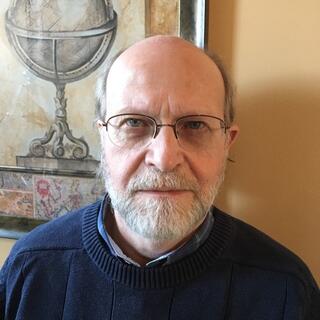
Michael Summers
- Professor
Contact Info
- Name
- Dr. Michael Summers
- Job Title
- Professor
- Phone Number
- Office Number
- Planetary Hall, Room 235, MSN 3F3
Affiliations
Departments
- Physics & Astronomy Department (Faculty)
Research Areas
- Astronomy
- Astrophysics
- Atmospheric Processes
- Atmospheric Science
- Climate Science
- Earth Observation
- Physics
- Planetary Science
- Science Education
Education
- Ph.D. Planetary Science, California Institute of Technology, 1985
- M.S. Space Physics, University of Texas at Dallas, 1979
- B.A. Physics, Mathematics, Russian, Murray State University, 1976
About
Prof. Michael E. Summers is a planetary scientist who specializes in the study of chemical and dynamical processes in planetary atmospheres, especially those that impact the habitability of the Earth and other planets, including some of those that lie outside of our solar system, i.e., exoplanets. He has undergraduate degrees in Physics, Mathematics, and Russian language from Murray State University (1976). He was a member of the first student exchange program between the U.S. and the former Soviet Union in 1975 and has a Language Degree from St. Petersburg University. He also has a master’s degree is Space Physics from U.T. Dallas (1978), and a Ph.D. in Planetary Science and Astronomy from the California Institute of Technology (1985). After obtaining his Ph.D., he was a Postdoctoral Fellow at Johns Hopkins University until 1987 and then was a space physicist at the Naval Research Laboratory until 1999. He joined George Mason University in 2000 and became Professor of Planetary Science and Astronomy in 2002.
Current Research
Michael’s work is primarily theoretical in nature, but he serves on several near-Earth and deep space mission science teams in the role of science planning, design, education and public outreach activities, and in the interpretation of spacecraft observations. He has made scientific contributions to over a dozen NASA space missions that study the Earth from space shuttle and orbiting satellites and that observe other planets in our solar system using deep space robotic missions. His research concerns how planets and their atmospheres develop – although driven by common physical, chemical, and sometimes biological processes – into the diverse types of planets we find in our solar system and beyond, including planets orbiting other stars that are so different from Earth that they challenge our imaginations. Over his career, his discoveries have helped to shape the goals of NASA space missions, from space shuttle missions studying the upper atmosphere of the Earth, to deep space robotic exploration of Mars, Pluto, the moons of Jupiter, and other objects the outer solar system.
As a few examples, Michael was a co-investigator and science team leader on the NASA Langley Mars Airplane proposal for the first Mars Scout Mission. He was a co-investigator and science team leader of the AIM (Aeronomy of Ice in the Mesosphere) Small Explorer mission that was launched in April 2007 as the first dedicated mission to study the role of these high-altitude clouds as indicators of global climate change. He was a member of the Science Team of the New Horizons mission to Pluto/Charon and the Kuiper Belt that was launched in January 2006 and performed a flyby of Jupiter in February 2007, and of the Pluto system in 2015. His research on the Pluto-Charon system focused on understanding Pluto’s atmospheric structure and its rapid loss to space. His current research on the atmosphere of Mars has addressed some of the questions posed by the possible existence of subsurface life and the release of metabolic by-products that would serve as biomarkers, and relatedly he has developed theoretical models of the early evolution of the Martian atmosphere. He is also researching the factors that impact the habitability of several solar system planets and their moons, as well as terrestrial-type exoplanets.
Michael has won numerous awards for his research and related activities. For examples, he won NASA’s Group Achievement Award five times, NRL’s Alan Berman Publication Award four times, and Mason’s Celebration of Science Award for his work in space exploration in 2006. In addition, NASA has recognized Prof. Summers as an exceptional communicator and advocate for science. In addition, as part of the leadership team on the NASA New Horizons Pluto mission he has won over a dozen and national awards, for example, the AAS Neil Armstrong Space Flight Achievement Award in 2016, the Science News “Science Story of the Year” for 2015, the Science Magazine “Reader Choice Award” for 2015, the 2016 John L. "Jack" Swigert Award for Space Exploration, the Aviation and Space Technology 2016 Space Laureate Award, the 2016 Robert H. Goddard Memorial Trophy, the 2016 GNC Technology Tenacity Award, the Time Magazine “Photo of the Year” for 2015 (the photo above), the CNN One of the Top 15 Stories of the Year 2015, the Wired Story of the Year 2015, the PBS Big Idea of 2015: Pluto’s Unmatched Magnificence, the National Air and Space Museum, 2015 Explorers Award, the The Edison Award 2015, the 2015 Carl Sagan “Cosmos Award” for Science Communication, the 2016 NASA award for Exceptional Scientific Achievement, and the US Postal Service produced a stamp commemorating the New Horizons exploration of Pluto in 2015.
Teaching Focus
Prof. Summers has helped create new degree programs and numerous courses that teach students about the big issues facing humanity on our home planet Earth. He has led the development of several of Mason’s first Ph.D. programs, and their core required courses in both undergraduate and graduate tracts, in the fields of physics, astronomy, atmospheric science, astrobiology, and planetary science. He is particularly well known for engaging large numbers of undergraduates in substantial research projects. Michael has received numerous teaching awards, including the 2013 GMU Teaching Excellence Award. Prof. Summers’ teaching extends far outside of his roles in GMU’s Physics department. He routinely teaches elementary and middle school workshops in astronomy and atmospheric science. He teaches advanced astronomy and space exploration to visiting students from Korea - the Daegu Science High School, among other international schools. He teaches at GMU’s Encore Learning program and for continuing education audiences at area churches on topics ranging from Earth history, the history of life on Earth, climate change, and science and faith. In his career, Michael has given over 1000 public talks on science and related topics.
Selected Publications
A few Relevant Publications:
- Summers, M.E., et al., Composition of Pluto’s Atmosphere, Univ. Arizona press, Space Science Series, 2021.
- Cruikshank, D.P., et al., Prebiotic Chemistry of Pluto, Astrobiology Journal, Volume 19, July 1, 2019.
- Stern, S.A., Initial results from the New Horizons exploration of 2014 MU69, a small Kuiper Belt object, Science, Volume 364, p. 6411, 2019.
- Stern, S. A., et al., The Pluto system: Initial results from its exploration by New Horizons. Science 350, 1815, 2015.
- Saxena, P. and M. E. Summers, An Atmosphere that Can Move and Mold a Planet: Atmospheric Mass Advection on Close-In Rocky Exoplanets, Monthly Notices of the Royal Astronomical Society Main Journal, October 2015.
Books:
- “Imagined Life: A Speculative Scientific Journey Among the Exoplanets in Search of Intelligent Aliens, Ice Creatures, and Supergravity Animals” by James Trefil and Michael E. Summers, The Smithsonian Institution Books, September 17, 2019.
- “Exoplanets” by Michael E. Summers and James Trefil, published by Smithsonian Books, March 2017.
- “Atmospheric Science Across the Stratopause” American Geophysical Union Monograph #123, Eds. D.E. Siskind, S.E. Eckerman, M.E. Summers, American Geophysical Union, Dec. 2000.
Awards
Alan J. Berman Research Publication Award: Naval Research Laboratory, Annual awards given by NRL for the highest quality research and communication publication. Awarded twice, once in 1992 and another in 1998.
Contact Info
- Name
- Dr. Michael Summers
- Job Title
- Professor
- Phone Number
- Office Number
- Planetary Hall, Room 235, MSN 3F3