
George Mason and UVA Wise researchers use phylogenomics to identify cyanobacteria in Shenandoah River
You’ve probably seen slimy mats of brownish green clinging to rocks in streams or on lake beds, and perhaps not given it another thought. But George Mason University’s Rosalina Stancheva Christova has.
Christova, an assistant professor in the College of Science, has been researching Microcoleus, a common mat-forming cyanobacterium found in streams and lakes worldwide, for more than 20 years. The troublesome thing about Microcoleus is that some strains pose a risk to human, animal, and aquatic ecosystem health, but others do not.
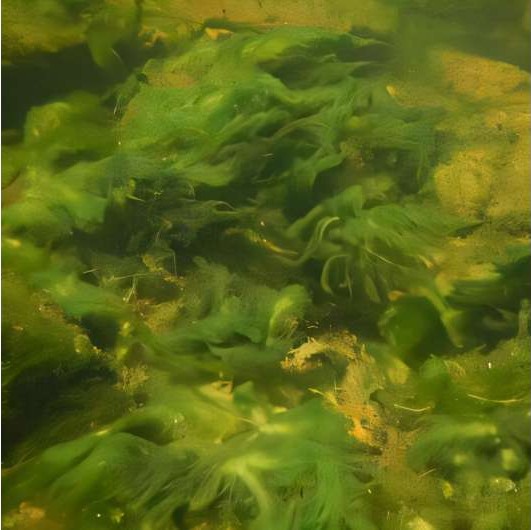
Christova leads the Algal Ecology Lab at George Mason and wanted to learn more about Microcoleus in George Mason’s backyard—the Shenandoah River. To do so, she reached out to a colleague at University of Virginia Wise, A. Bruce Cahoon, who shared her interest in the research. Together, Christova and Cahoon set out to study the species’ diversity, distribution, and toxicity in the Shenandoah.
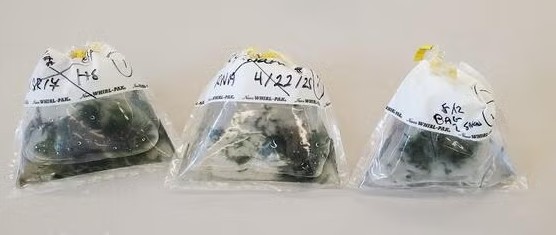
4-VA approved their collaborative research grant proposal, “Integrative Characterization of the Anatoxin-a-Producing Benthic Cyanobacterial Genus Microcoleus in the Shenandoah River,” and Christova and Cahoon got to work. Research began with the collection of benthic mats over a two-year period from 11 sites in the North and South Forks of the Shenandoah River.
It proved successful and surprising, revealing a stunning breakthrough in identification of Microcoleus collected from the river. Some of the bacteria was not actually Microcoleus after all, but a genus called Limnofasciculus that was discovered in 2023.
In all, the team identified six species and isolated two monoclonal Microcoleus strains, one nontoxic and one producing anatoxin-a.
“Phylogenetic analyses based on 16S rRNA gene sequences confirmed that both strains belong to the genus Microcoleus. The toxic strain was most closely related to M. anatoxicus from California, confirming the wide distribution of this problematic cyanobacterium,” said Christova.
Christova credits her large team for doing the good but difficult work. She was supported by her co-PI Benoit Van Aken, an associate professor in the Department of Chemistry and Biochemistry, and Pat Gillevet, director of the Microbiome Analysis Center. Graduate students Jacob Mormando, Sydney Brown and Rwan Alsaadi also worked on the project.
Mormando collected a sample with novel Limnofasciculus species for genome analysis and conducted temperature experiments with the toxic Microcoleus strain. Brown handled molecular and morphological studies of the species, field work collecting benthic cyanobacteria from the river, molecular work and cyanobacteria culturing. Alsaadi developed distributional and ecological data and collected benthic cyanobacteria from the river.
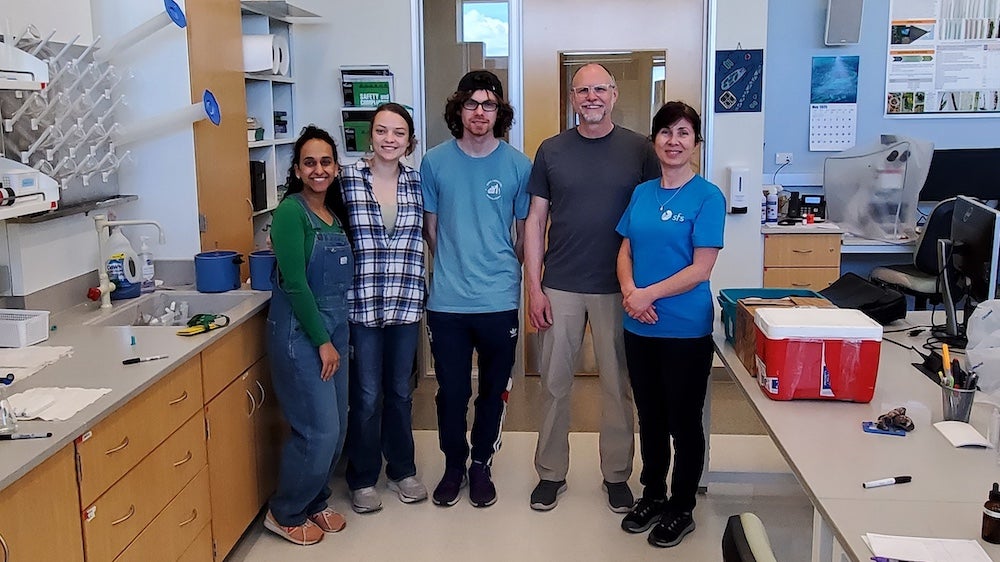
Undergraduate students also played a role in the effort. Biology major Armon Ghaffari did data analysis of Microcoleus distribution in the river samples, and environmental science major Emma Boyden oversaw the laboratory maintenance of cyanobacterial cultures.
Two undergrads at UVA Wise, Amelia Clark and Matthew Sullivan, prepared molecular work.
Additionally, Janice Lawrence and Cecilio Valadez-Cano of the University of New Brunswick, Canada, helped with the molecular studies. Another important collaborator on the project was Gordon M. Selckmann, associate director for Aquatic Habitats at Interstate Commission on the Potomac River Basin (ICPRB). The 4-VA team used some of the field material Selckmann collected as part of an ongoing investigation of the benthic harmful algal blooms in the Shenandoah River funded by the Virginia Department of Environmental Quality and ICPRB.
The team is now sharing their findings and have presented at the Society for Freshwater Science Annual Meeting, the Southeastern Phycological Colloquy, the Potomac River Conference, and the 2025 Biennial Coastal and Estuarine Research Federation Meeting in Richmond, Virginia.
“The 4-VA@Mason funding was very important to me, as it supported the establishment of my research lab, fostered the development of regional and international research collaborations, and provided funding for undergraduate and graduate students interested in aquatic and cyanobacterial research,” said Christova.
```


