

Faculty & Staff Directory
Nadine Kabbani
- Professor
- Associate Chair for Research, Interdisciplinary Program in Neuroscience
Contact Info
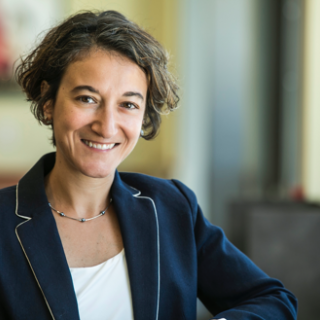
- Name
- Dr. Nadine Kabbani
- Job Title
- ProfessorAssociate Chair for Research, Interdisciplinary Program in Neuroscience
- Phone Number
- Office Number
- Krasnow Institute, Room 233, MSN 2A1
Affiliations
Departments
- School of Systems Biology (Research Faculty)
- Neuroscience Program (Research Faculty)
Other Affiliations
- Schar School for Policy and Government
- Center for Biomedical Science and Policy
Centers
- Institute for Biohealth Innovation
Research Areas
- Neuroscience
- Pharmacology
- Science Policy
Education
PhD, Pharmacology, Penn State College of Medicine, (2003)
About
Dr. Nadine Kabbani is a neuroscientist and molecular pharmacologist whose research examines the molecular mechanisms connecting neuronal signaling, immune function, and disease. She earned her Ph.D. in pharmacology from the Penn State College of Medicine and completed postdoctoral training at Yale University and the Institut Pasteur in Paris.
Since joining George Mason University in 2008, Dr. Kabbani has led a research program investigating cholinergic signaling in the nervous and immune systems. Her group helped establish the metabotropic signaling functions of nicotinic acetylcholine receptors (nAChRs), including their interactions with G proteins in neural and immune cells.
Current research in the Kabbani laboratory focuses on neuroimmune communication, with interests in microglial biology, aging, nicotine and HIV, and chemotherapy-induced peripheral neuropathy (CIPN). The laboratory uses cellular and animal models, proteomics, quantitative imaging, and computational approaches to identify molecular and spatial changes associated with neuroinflammation, neuropathic pain, and nervous system aging.
Across these programs, the laboratory integrates mass spectrometry-based proteomics with artificial intelligence and machine-learning approaches for cellular imaging and analysis, with interests in mitochondrial biology and the discovery of molecular and cellular signatures of disease.
Dr. Kabbani is also an affiliate faculty member in the Schar School of Policy and Government, where her interests extend to the public health implications of substance use and environmental exposures.
Teaching Focus
Cellular and Molecular Neuroscience, Neuropharmacology, Neuroscience and Society
Selected Publications
Google Scholar profile: https://scholar.google.com/citations?user=Aip4aXEAAAAJ&hl=en
1. Nusir A, Martinez Cardenas CA, Arellano J, Duque A, Kabbani N. Spatial statistics and point pattern analysis reveal lifespan trajectories of microglial density and clustering in the primate hippocampus. Sci Rep. 2026 Jun 30. doi: 10.1038/s41598-026-60014-x.
2. Nusir A, Anthony SM, Zhou W, Kabbani N. Microglial Adaptations to Chronic Nicotine in the Cerebellum: Proteomic Evidence for Neuroimmune Vulnerability. J Proteome Res. 2026 May 1;25(5):2359-2373. doi: 10.1021/acs.jproteome.5c01027. Epub 2026 Mar 30.
3. Schwarting SP, Espina V, Russo PS, Herz SM, Khan A, Rakholia Y, Makar S, Bos PD, Damaj MI, Kabbani N. Proteomic Adaptations in the Spinal Cord of a Breast Cancer Model of Paclitaxel-Induced Peripheral Neuropathy. J Proteome Res. 2026 Aug 7;25(8):4072-4085. doi: 10.1021/acs.jproteome.6c00124.
4. Graur A, Sinclair P, Nusir A, Erickson N, Kabbani N. HIV-1 gp120 interactions with nicotine modulate mitochondrial function and amyloid release in microglia. Neurochemical Research. 2025;50(2):103.
5. Sinclair P, Jeffries W, Lebert N, Saeed M, Ullah A, Kabbani N. A predictive machine learning model for cannabinoid effect based on image detection of reactive oxygen species in microglia. PLoS ONE. 2025;20(3):e0320219.
6. Hanna R, Graur A, Sinclair P, McKiver BD, Bos PD, Damaj MI, Kabbani N. Proteomic analysis of dorsal root ganglia in a mouse model of paclitaxel-induced neuropathic pain. PLoS ONE. 2024;19:e0306498.
7. Graur A, Haymond A, Lee KH, Viscarra F, Russo P, Luchini A, Paige M, Bermudez-Diaz I, Kabbani N.Protein painting mass spectrometry in the discovery of interaction sites within the acetylcholine binding protein. ACS Chemical Neuroscience. 2024;15(11):2322–2333.
8. Graur A, Sinclair P, Schneeweis AK, Pak DT, Kabbani N. The human acetylcholinesterase C-terminal T30 peptide activates neuronal growth through alpha 7 nicotinic acetylcholine receptors and the mTOR pathway. Scientific Reports. 2023;13(1):11434.
9. Sinclair P, Kabbani N. Ionotropic and metabotropic nicotinic receptor signaling. Pharmacological Research. 2023;197:106975.
10. Kabbani N, Nichols RA. Beyond the Channel: Metabotropic Signaling by Nicotinic Receptors. Trends in Pharmacological Sciences. 2018;39(4):354–366.
Contact Info
- Name
- Dr. Nadine Kabbani
- Job Title
- ProfessorAssociate Chair for Research, Interdisciplinary Program in Neuroscience
- Phone Number
- Office Number
- Krasnow Institute, Room 233, MSN 2A1