

George Mason University and University of Tokyo Scientists Mine Past Air Temperature Forecasts, Lower Cost With Greater Subseasonal Prediction Accuracy
International research collaboration develops smarter reuse of past forecasts to improve subseasonal heat predictions—without extra computation
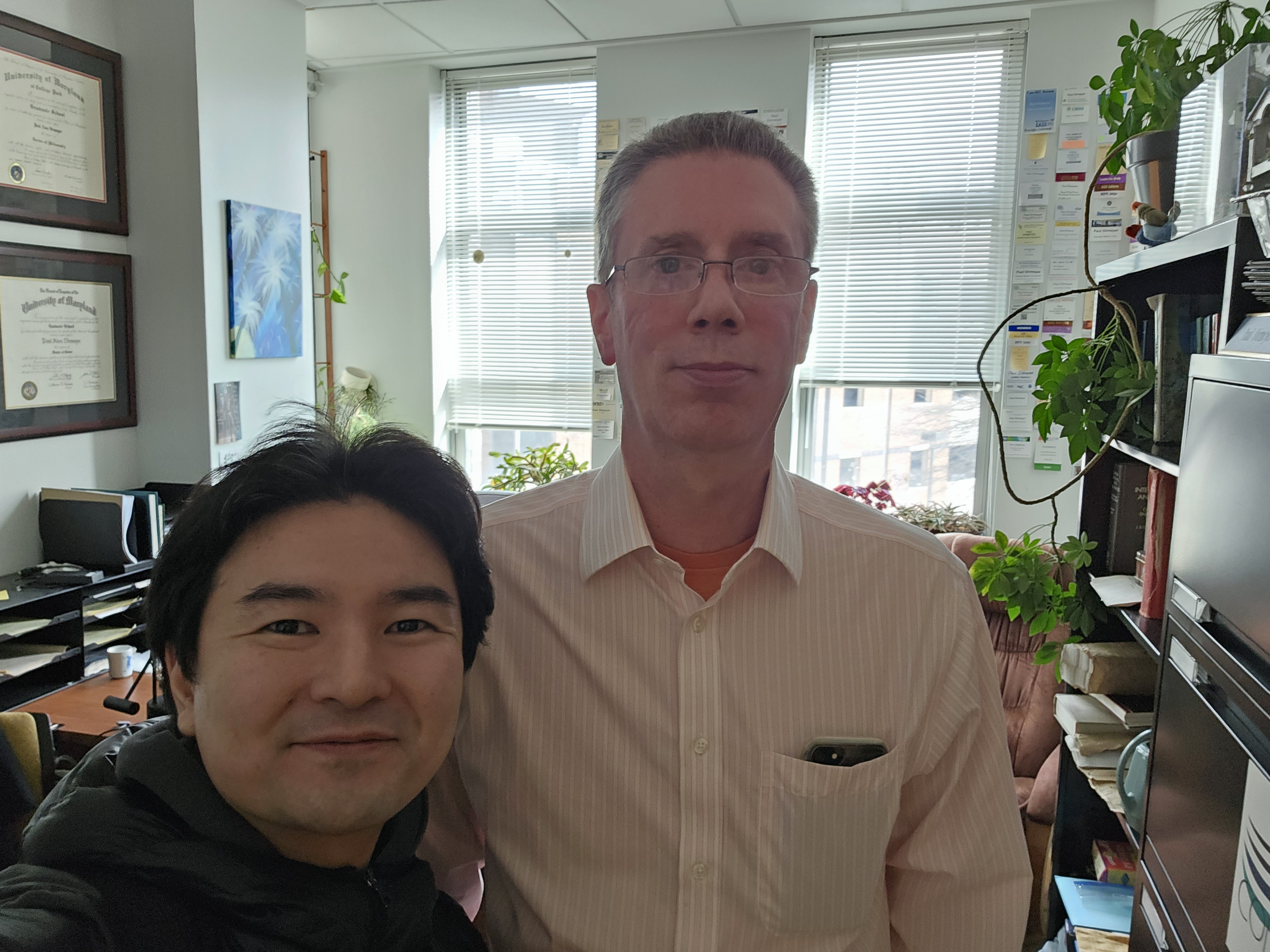
Researchers at George Mason University‘s College of Science and the University of Tokyo have developed a new method that improves air temperature forecasts one to five weeks in advance—without requiring additional model simulations. Made possible by support from the National Oceanic and Atmospheric Administration (NOAA), the methodology, detailed in The Proceedings of the National Academy of Sciences provides a dual benefit, not requiring significant increase in computational cost while improving predictions. The approach selectively retains only the past ensemble members that demonstrated high predictive skill, which offers a practical pathway for improving operational subseasonal-to-seasonal (S2S) forecasts within existing resource constraints. The approach may also extend to machine learning–based prediction systems, hydrological forecasting, and climate modeling frameworks.
S2S forecasting bridges short-term weather prediction and seasonal outlooks, but forecast skill often declines rapidly beyond two weeks due to chaotic atmospheric dynamics. Increasing ensemble size can help, yet computational limits restrict this approach. The research team introduced a simple post-processing method called Lagged Ensemble Analog Sub-selection (LEAS). Instead of pooling all past forecasts into the latest ensemble, LEAS selectively reuses only those previous ensemble members that most accurately reproduced observed conditions at the latest initialization time.
“Previous forecasts are not outdated,” said Paul Dirmeyer, distinguished university professor in the Department of Atmospheric, Oceanic and Earth Sciences (AOES) “The atmosphere and land surface provide valuable memory that can influence weather for weeks. By retaining and grouping the best performing members of a series of forecasts, we can enhance forecast performance without rerunning the model,” explained Dirmeyer who is also a senior scientist in George Mason’s Center for Ocean-Land-Atmosphere Studies (COLA).
LEAS was evaluated using hindcasts of daily maximum temperature over North America from four operational S2S models around the world. Across multiple lead times—from week 1 through week 5—the method improved both deterministic and probabilistic forecast skill. In some regions, temperature forecast error was reduced by up to about 10 percent, and skill in predicting extreme heat events also improved.
“What surprised us most was that such a simple strategy worked consistently across all four independent forecast systems,” said Daisuke Tokuda, project lecturer at the University of Tokyo.
Conventional approaches in weather forecasting attempt to manage the chaotic nature of the atmosphere by running multiple simulations from slightly different initial conditions—a strategy known as ensemble forecasting. This helps capture uncertainty, but increasing ensemble size requires significant computational cost. Simply adding forecasts from earlier initializations does not necessarily improve the latest prediction.
“Our method allows us to take the best aspects of both approaches,” Tokuda added. “We selectively retain only the past ensemble members that demonstrated high predictive skill, avoiding the degradation that can occur when older, lower-quality forecasts are included.”
Because LEAS requires no additional computation, it offers a practical pathway for improving operational S2S forecasts within existing resource constraints. The approach may also have an extended impact, with possible use within machine learning–based prediction systems, hydrological forecasting, and climate modeling frameworks.
“I studied in an engineering department before coming to AOES at George Mason,” Tokuda recalled. “I vividly remember a conversation with Professor Dirmeyer: ‘in engineering, you are expected to find a single answer to a given problem. In science, you do not have to rush to find one. If your method is sound, it is acceptable—even valuable—if there is no immediate answer.’” That moment, Tokuda said, reshaped his view of research. “Weather forecasting lies at the crossroads of science and engineering, and I am truly excited that this work brings those two perspectives together,” Tokuda enthused.


