
Virginia Data Science Teacher Institute marks fifth year of statewide growth
George Mason University-led initiative helps position Virginia at the forefront of K–12 data science education in the age of AI
What began with about 30 educators in 2022 has grown into a statewide movement helping thousands of Virginia students develop skills in data science, computational thinking, mathematical modeling, and artificial intelligence.
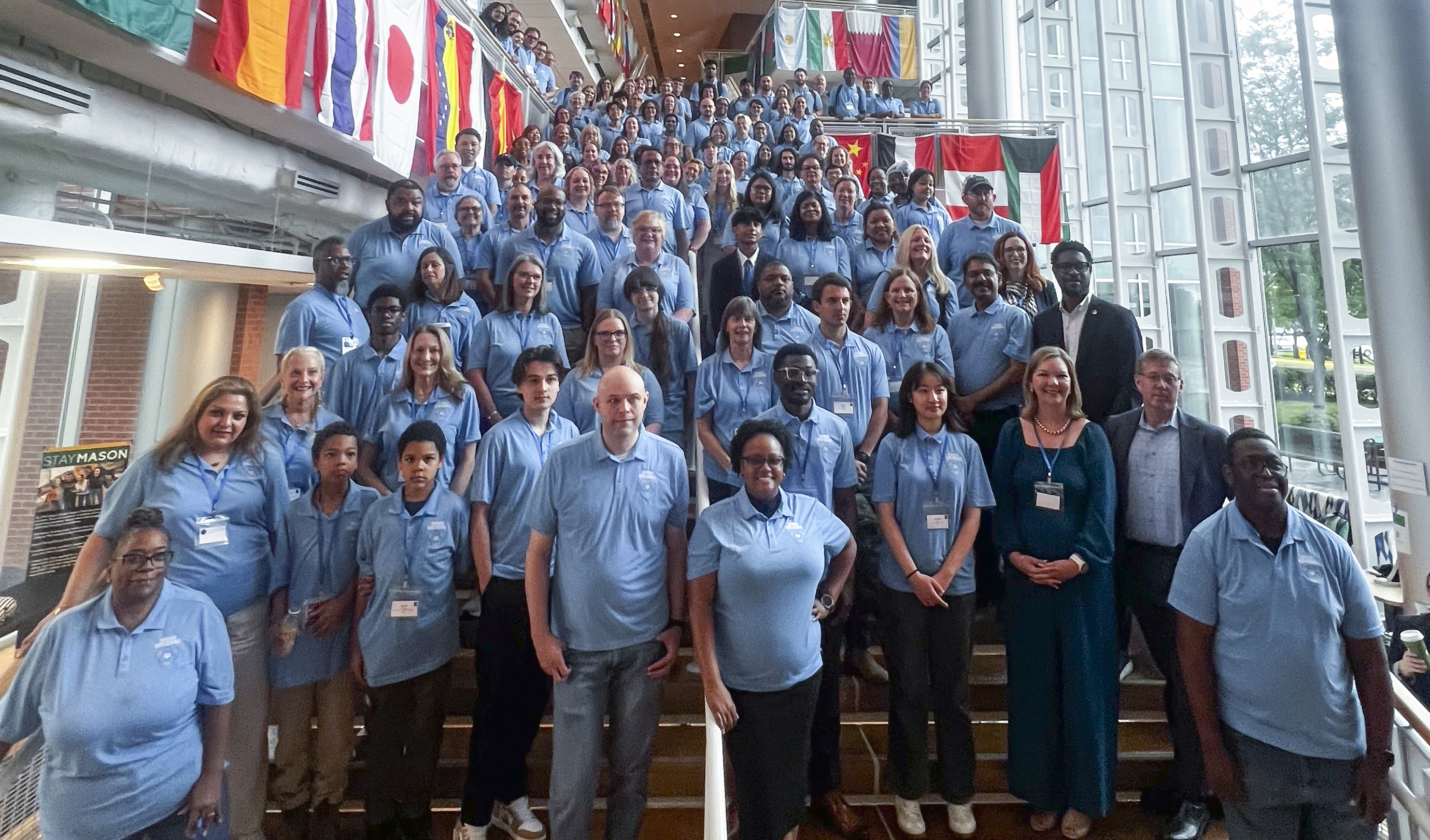
More than 225 educators, instructional leaders, higher education partners, students, and industry experts gathered June 22–23 at George Mason University’s Science and Technology Campus in Manassas for the fifth annual Virginia Data Science Teacher Professional Learning Institute. The 2026 theme, “Data Science, Computational Thinking, and Modeling in the Age of AI,” reflected growing demand for data literacy and analytical thinking across industries.
For George Mason, the institute represents more than professional development. It highlights the university’s role as a statewide convener while advancing its Grand Challenge Initiative solution to support 21st-century education.
Since the Virginia Board of Education approved a high school Data Science course in 2022, data science courses have expanded to more than 130 Virginia schools, reaching more than 4,000 students.
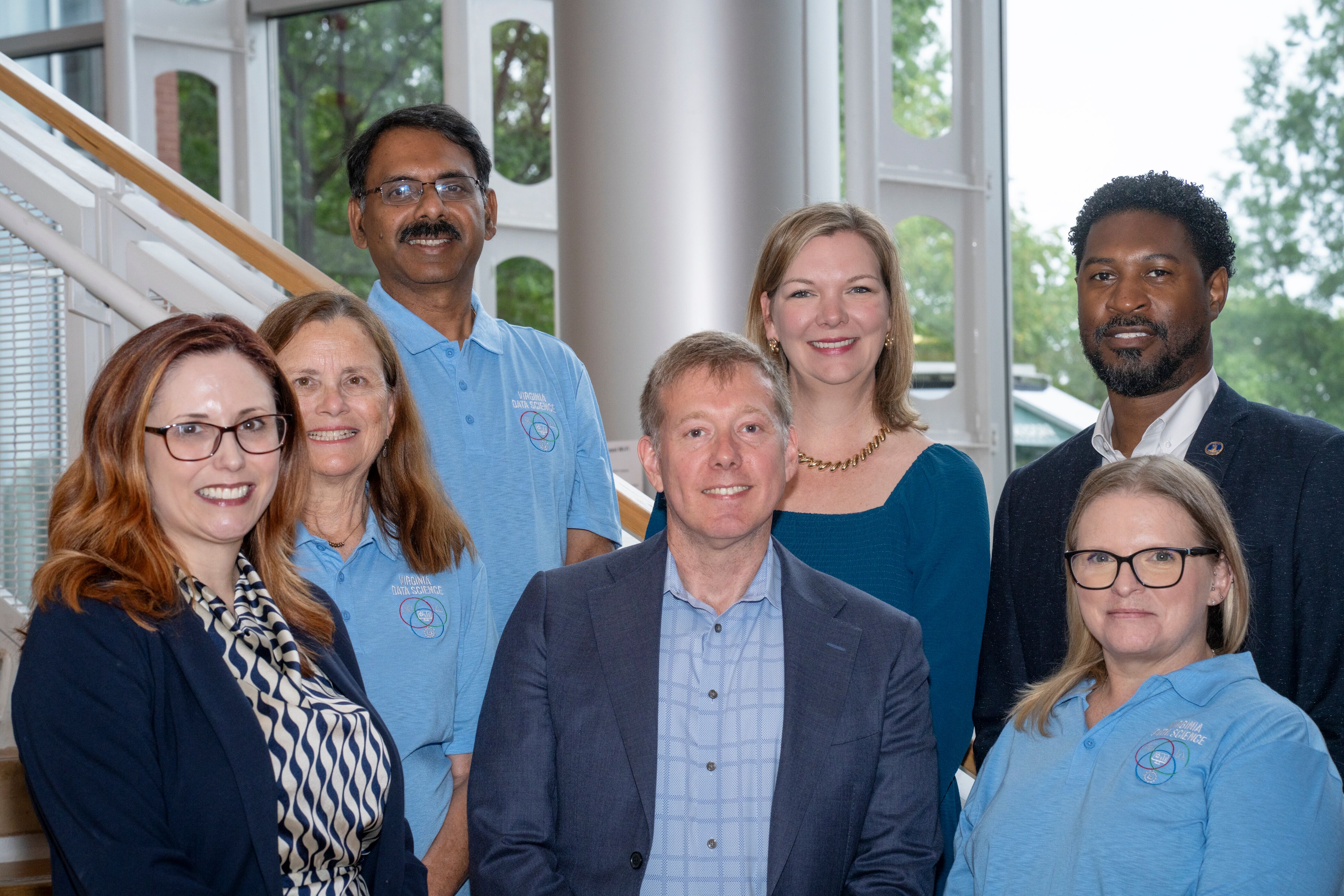
“What started as a vision has become a thriving statewide movement,” said conference co-chair Padmanabhan Seshaiyer, George Mason College of Science professor of mathematical sciences and presidential advisor for strategic partnerships.
“This kind of growth speaks to the enthusiasm, commitment, and collective effort behind expanding data science opportunities for students,” said conference co-chair Deb Crawford, coordinator of secondary mathematics at Frederick County Public Schools.
“The institute's rapid growth underscores Virginia's emergence as a national leader in preparing students to navigate a data-rich world,” said keynote speaker Kate Maxlow, senior advisor to the Secretary of Education for the Commonwealth of Virginia.
Participants selected from more than 40 sessions, heard from 10 keynote speakers, explored student projects, earned continuing education credits through George Mason, and learned about classroom-ready resources.
This year’s keynote speakers and featured leaders included Jenna Conway, Virginia superintendent of public instruction; Conrad Wolfram, co-founder of Wolfram Mathematica; Ben Galuzzo, executive director of COMAP; Eli Luberoff, founder and CEO of DESMOS; Ji Yun Son, co-founder of CourseKata; and Amarda Shehu, George Mason’s vice president and chief AI officer. Their expertise in mathematics education, computational thinking, curriculum innovation, and educational technology provided participants direct access to leaders shaping how students learn and reason with data in an AI-driven world.
Building opportunity through data science
Welcoming attendees on behalf of George Mason President Gregory Washington, Whitney Owen, vice president of strategy and transformation and special advisor to the president, emphasized educators’ role in helping students understand a rapidly evolving technological landscape.
“You're helping students learn how to think, how to ask questions, how to analyze evidence, how to recognize patterns, and how to make informed decisions,” Owen said. “You're helping them become critical consumers and ethical creators of data and technology.”
Owen also highlighted George Mason’s mission as an “opportunity-first” institution and its commitment to creating pathways for students across Virginia.
Preparing students for an AI-driven future
A central theme throughout the institute was that while artificial intelligence is transforming nearly every profession, students need strong foundations in data and computational thinking to succeed.
Dewayne McClary, Virginia deputy superintendent for innovation, student pathways, and opportunities, offered an analogy that resonated with attendees.
“AI is the icing,” McClary said. “It's sweet. It looks amazing on top of everything. It even makes it easier and prettier and faster. But we cannot teach kids to only eat icing.”
Instead, he said, students must understand the concepts behind emerging technologies.
“They need data literacy. They need skepticism. They need discourse. They need to understand how a model works and not just copy what it says,” McClary said. “We have to teach them the ingredients of what goes into the muffin, not the icing.”
Industry leaders echoed the need for students who can move beyond simply using AI tools to understanding the systems and data behind them.
“We need the people and the validation, human oversight, data hygiene,” said Jay Crossler, technical fellow at MITRE and a George Mason alumnus. “As organizations increasingly rely on AI-powered systems, professionals who can verify results, identify errors, understand data quality, and apply critical thinking will become even more valuable.”
For Seshaiyer, who helped develop Virginia’s data science curriculum, the institute’s success reflects years of collaboration among educators, school divisions, state agencies, universities, and industry partners. This year’s institute was co-sponsored by the Ambassadors of Teaching in the Age of AI (ATAA) program, co-led by Peng Warweg, research program director in George Mason’s College of Engineering and Computing, and aligns with the mission of George Mason’s Data Science, Computing, and Applications Lab School partnership.
“We welcomed educators from across Virginia, and even a few from Arizona, Maryland, and New York, to George Mason University to collectively explore meaningful ways to integrate data practices that equip all learners with valuable, workforce-ready skills,” Seshaiyer said.
He believes the institute’s impact extends far beyond the event itself.
“Every teacher who leaves this institute takes new ideas, tools, and opportunities back to hundreds of students,” Seshaiyer said. “When educators, state leaders, higher education, and industry work together, we can build pathways that help every student see themselves as problem-solvers, innovators, and future leaders.”


