
High Schoolers Gain Hands-On Research Experience and College Credit in George Mason Aspiring Scientists Summer Internship Program
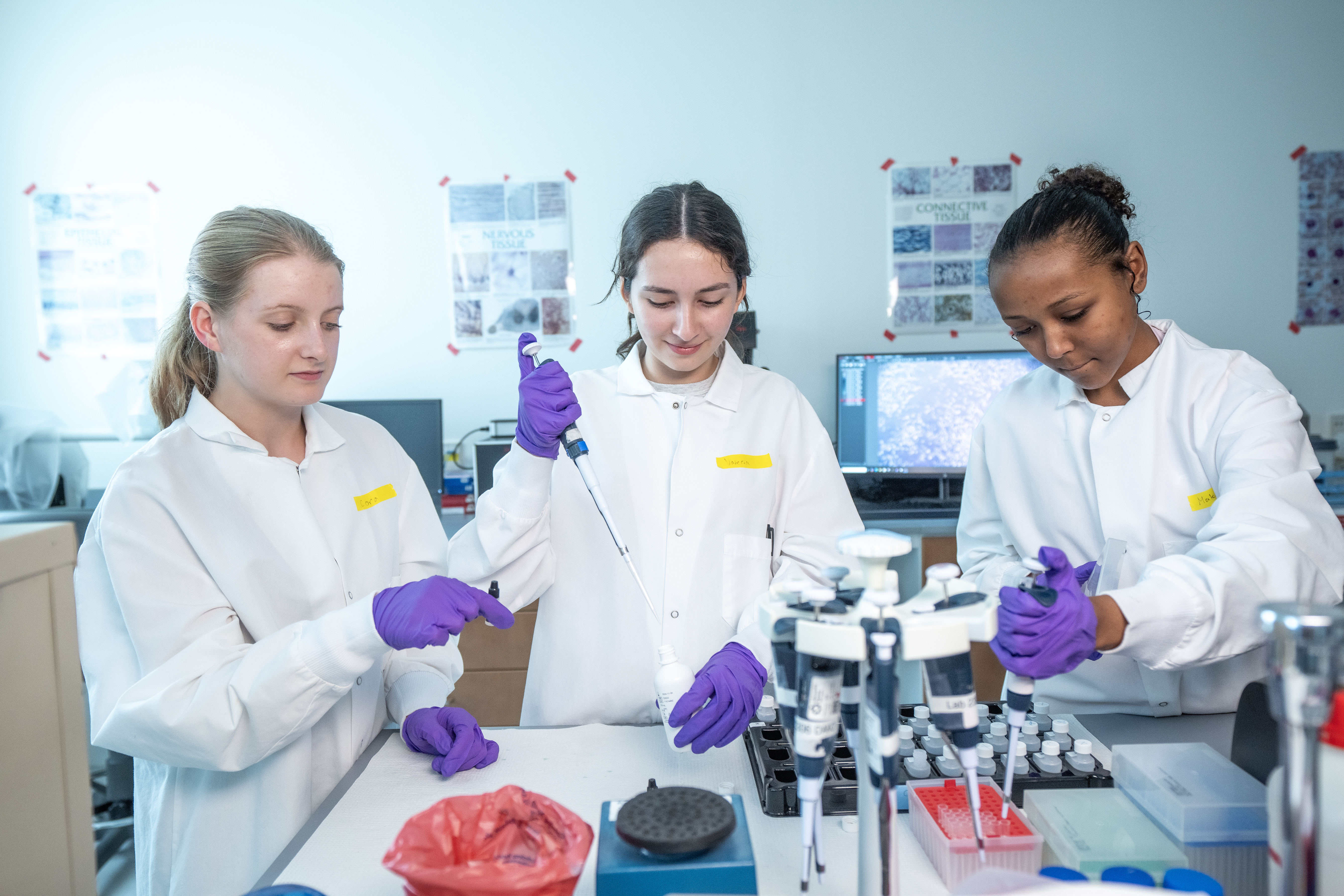
Applications for the 2026 Aspiring Scientists Summer Internship Program (ASSIP) opened on Monday, December 8, 2025, and high school and undergraduate students with STEM interests have until February 15, 2026, to apply for this highly competitive research opportunity. During the eight-week, full-time program running June 18 through August 12, ASSIP interns gain far more than a résumé boost. They engage directly with cutting-edge scientific technologies, strengthen their communication, creativity, and problem-solving skills, explore STEM career paths alongside dedicated research mentors, and earn three college credits from George Mason University.
ASSIP spans the full spectrum of sciences, offering students both in-person or virtual research experiences anchored by a research capstone presentation. Projects range from practical solutions, like reducing bacterial contamination in hydroponic gardens, to advanced studies of solar coronal magnetic loops and the synthesis of lipid nanoparticles.
“Students don’t work on canned experiments where we know what is going to happen,” said Systems Biology Research Professor and ASSIP mentor Virginia Espina. “We have no idea what will happen. They are participating day to day with us. Some experiments work; some don't. Some results show that our hypothesis is correct and sometimes we have findings that lead us down an entirely new pathway.”
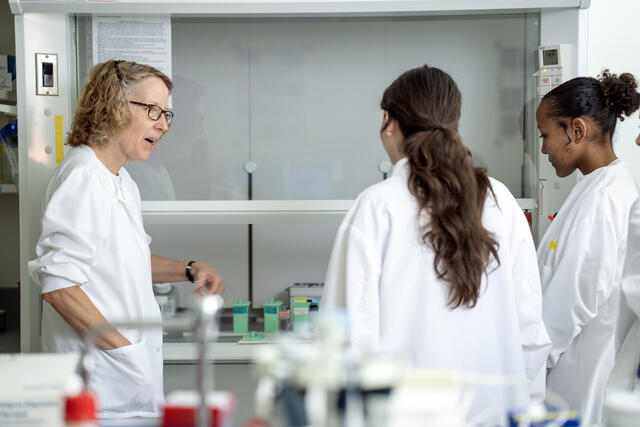
This past summer, Edison High School senior Valeria Salvador joined the ASSIP program, selecting to work alongside Espina who specializes in women’s health, cancers, and inflammatory diseases. Salvador spent her summer investigating how breast-cancer treatments affect protein pathways in spinal cord cells; work that could help explain why many patients develop painful neuropathy during chemotherapy.
“Working hands-on in the lab and learning the concepts and techniques as I used them really helped me understand my project on a deeper level,” Salvador said.
Espina and neuroscience Associate Professor Nadine Kabani had already been researching how chemotherapy causes nerve damage when Salvador assisted in a new dimension to the project that involved working with spinal cord cells exposed to breast cancer and to paclitaxel, a chemotherapy drug known to cause nerve pain.
Salvador prepared the stored spinal cord samples, treated them with buffer solutions, and helped run them through a mass spectrometer to identify and quantify proteins. The resulting data showed which proteins appeared, how often, and how they varied across treatment conditions.
“Once students are comfortable with the instruments, we walk them through the project and each step of the process,” Espina said. “I’ll demonstrate for a day or two and, depending on how quickly they pick things up, we let them take over under our supervision. They learn fast because our mentorship is so hands-on and one-on-one.”
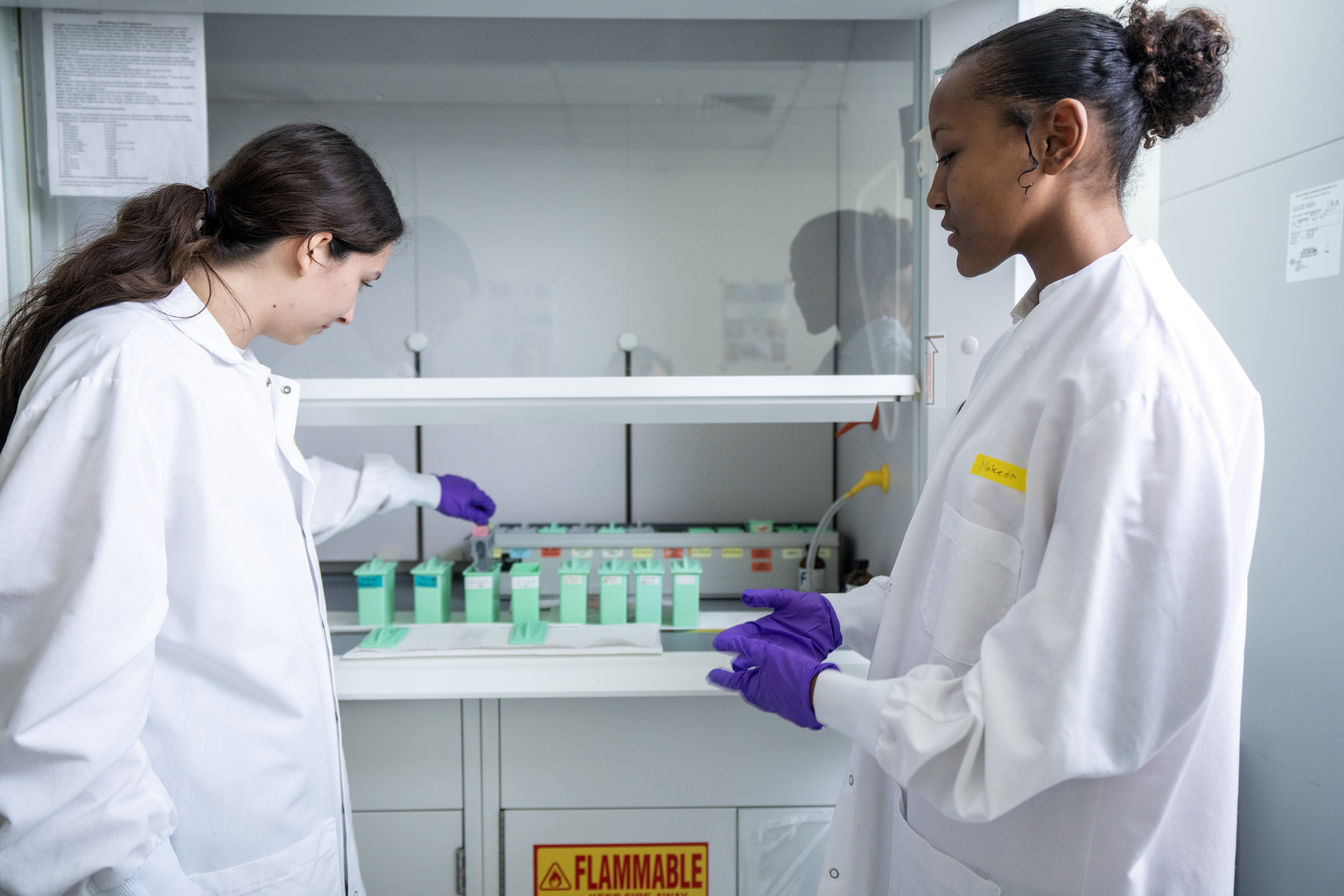
Cora Shields, a junior at Riverbend High School also worked alongside Espina for her ASSIP research that focused on endometriosis. When interviewing as part of the application process, Shields expressed an interest in autophagy, a process that allows cells to recycle damaged components and resist stress. Because of this interest, she was paired with Espina’s lab, where her project focused on understanding the cellular mechanisms that allow endometriosis to persist and grow outside the uterus, and on determining whether disrupting autophagy could slow cell growth or trigger cell death.
In the George Mason SciTech Campus-based lab, Shields worked with cultured cell lines, exposing them to drugs designed to inhibit autophagy. Using a robotic arrayer, Shields helped identify whether there are proteins that differ from cell lines with and cell lines without endometriosis.
“So many colleges are focused on research, and having prior exposure to lab techniques really helps,” Shields said. “If you can show that you already know how to prepare samples and use basic equipment, that’s less work for them—they won’t have to teach you everything from scratch. They might even let you move into more advanced work sooner, which is the hope.”
Amanda Haymond Still, BS Chemistry ’13, PhD Biochemistry ’17 leads the ASSIP program and said applications to the program exploded after adding a virtual option in response to the pandemic. Interns can now take part from any location, and for some research projects, remote participation works extremely well. “We encourage our ASSIP interns to learn from George Mason’s experts and to grow into scientists themselves, tapping into all the grit and creativity the process demands.”


