Consumer Electronics Show (CES) 2026
Bold Solutions for a Changing World
Innovation thrives where universities, industry, and investors meet. At CES 2026, George Mason University is positioned to build the partnerships that will accelerate breakthroughs across science, engineering, health, and business. With 305+ Fortune 500 companies represented, CES offers unmatched opportunities to collaborate, co-create, and scale ideas that matter. We’re proud to represent our region on this global stage.

George Mason's College of Science is a Research Powerhouse. And We Deliver.
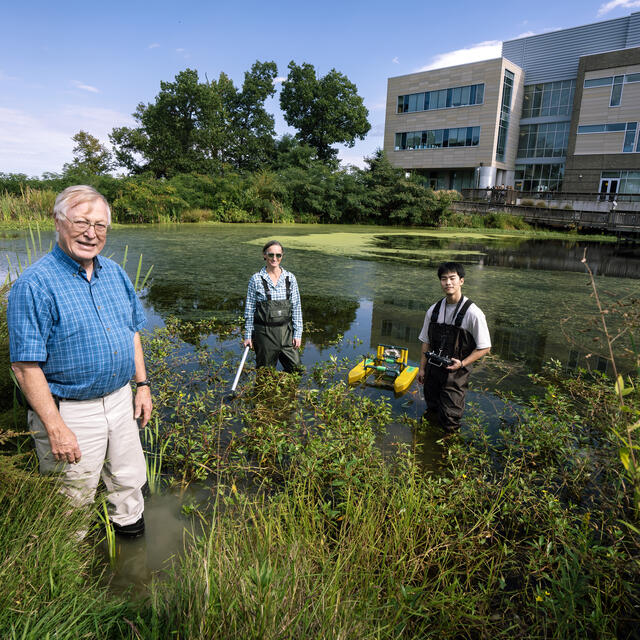
As an R1 university—a classification for institutions with the highest level of research—Mason has the people, funding, and facilities to support broad, interdisciplinary studies, as well as specialized research. Our results-oriented scientists create and share new knowledge and develop innovative techniques that impact society, the economy, and the environment. We believe that research should be used to make a difference in our communities and the world.

Research of Consequence
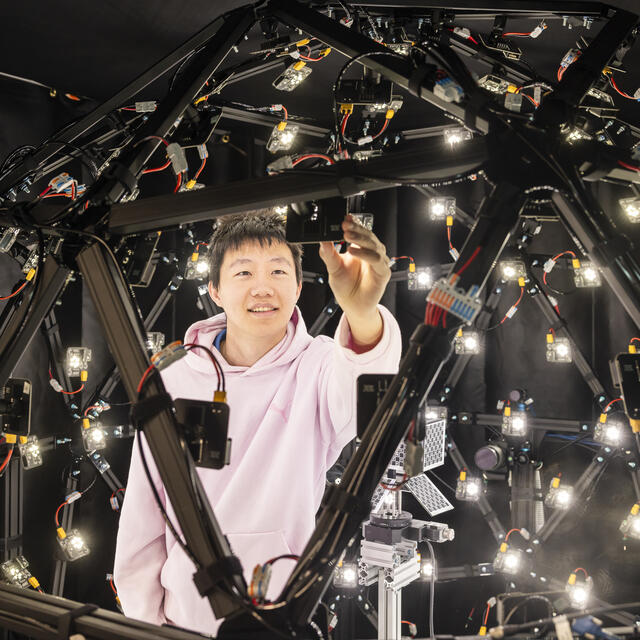
The College of Engineering and Computing advances interdisciplinary research that develops innovative technologies to address real-world challenges. By pushing the boundaries of engineering and computing, researchers are improving quality of life and creating a safer, cleaner, healthier, and more prosperous future. Building on strong foundations in information and communication technology, this work continues to expand into new and impactful areas of discovery.

George Mason is advancing solutions with real-world impact
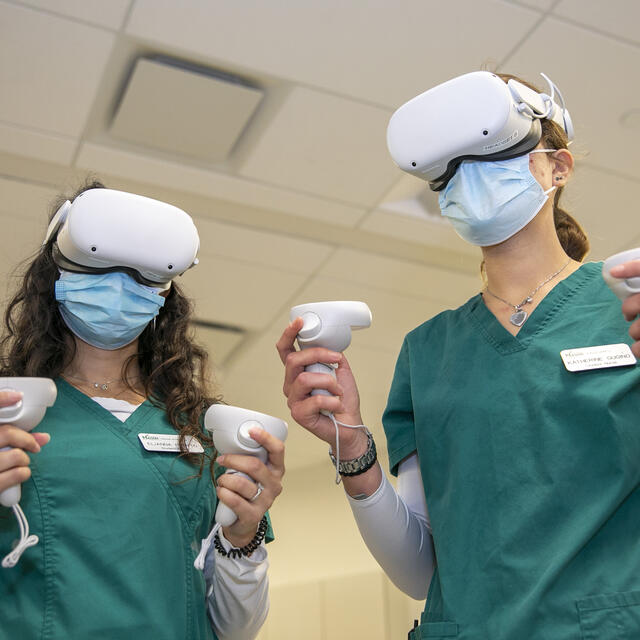

Research and Practice in Public Health
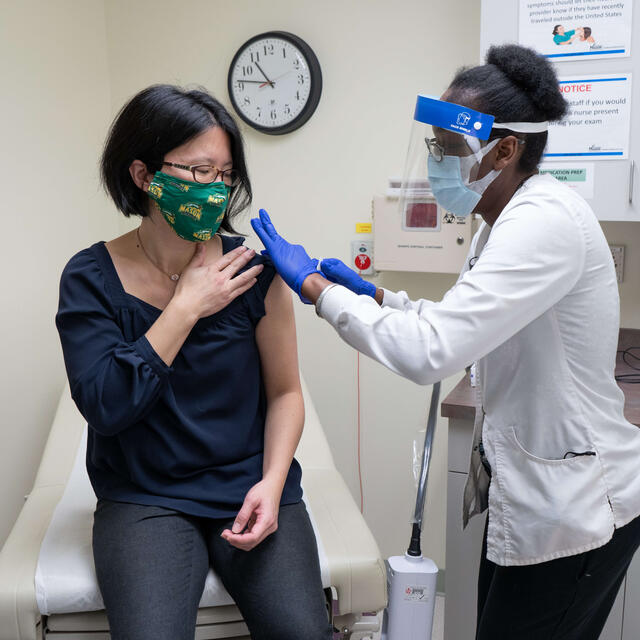
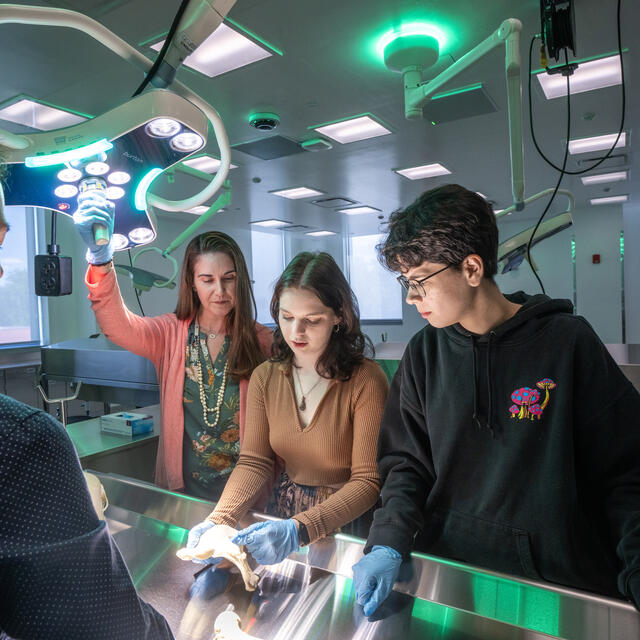
George Mason University’s College of Public Health advances research that strengthens health outcomes and supports the university’s research-intensive mission. Faculty integrate research, community practice, and teaching to address pressing health challenges through multidisciplinary collaboration. Students engage early in research and community-based initiatives, gaining hands-on experience and mentorship that build critical skills and prepare them to lead in the health field.

Ideas with Impact
The Costello College of Business at George Mason University is a leading center for impactful business research. Faculty are engaged with research that is both rigorous and relevant. Costello faculty love to bring their research to the classroom, where they talk about their findings and ideas—which enriches the knowledge our students are exposed to. The faculty research also shows up in policy and business practice, and is making an impact on the business of government and industry.

Research Leading Innovation
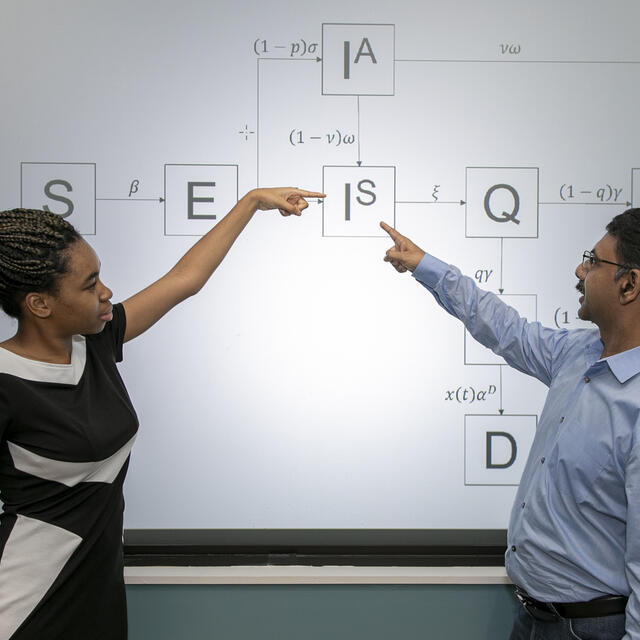
Center for Mathematics and Artificial Intelligence
The Center for Mathematics and Artificial Intelligence (CMAI) was founded in 2020 with a goal to provide unique learning experiences for students and postdocs and to foster ties between Academia, National Labs, Industry, and Government.
The Center focuses on artificial intelligence, digital twins, big data, neuromorphic imaging, control, optimization, anomalous (nonlocal) diffusion, nonlinear partial differential equations, with a broad range of applications. CMAI is funded by George Mason University, National Science Foundation, Department of Energy, Defense Threat Reduction Agency, Air Force Office of Scientific Research, Army Research Office, and Department of Navy.
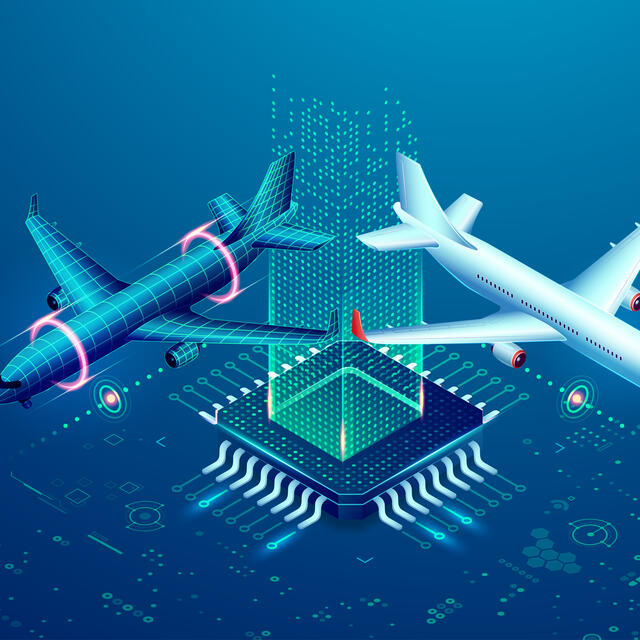
Quantum Science and Engineering Center
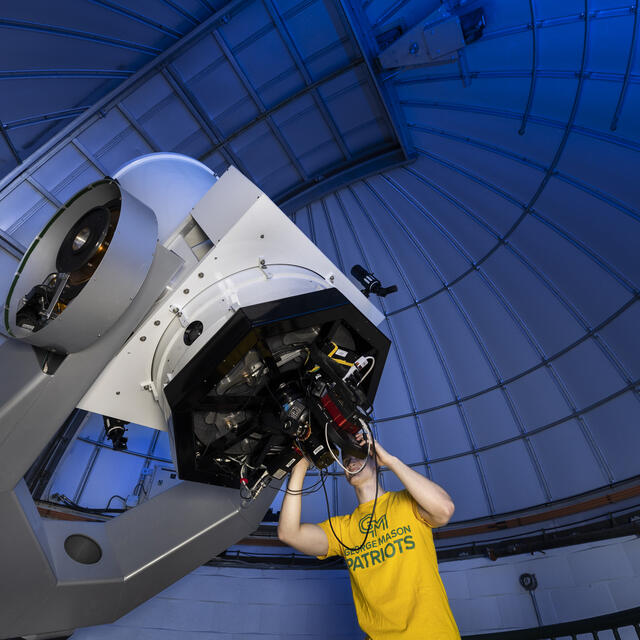
The Quantum Science and Engineering Center(QSEC) was established in February 2018 as a Center for Advanced Study supported by the Provost Office of Research. In 2025, QSEC was rechartered jointly by the College of Science and the College of Engineering and Computing. The Center’s primary mission is to accelerate the second quantum revolution by combining the efforts of physicists, mathematicians, computer scientists, and engineers. QSEC pursues these goals in collaboration with industrial partners, government organizations, and national consortia.
QSEC has grown beyond its roots as a materials science organization to a community of Mason scientists and engineers interested in advancing quantum technology. Our members focus on creating quantum algorithms for quantum computing, constructing ultra-sensitive quantum sensors, designing and discovering quantum materials for new computing technologies, and building training programs to prepare Mason students for a technological workforce that will increasingly require a knowledge of quantum science and engineering.
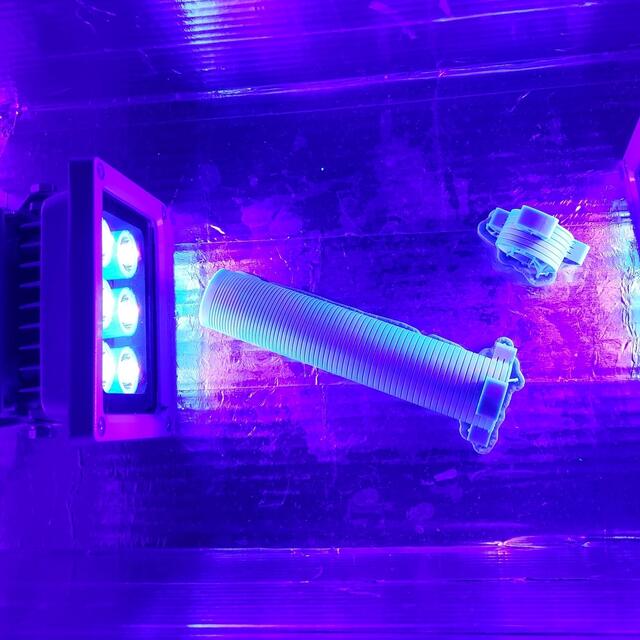
Five of Seven Selected GCI Projects Focus on Science
The GCI is a comprehensive research framework driving bold solutions for a prosperous future. Backed by an initial five-year, $15 million investment, GCI aligns university resources, faculty expertise, and educational programs around six interconnected solution areas addressing humanity’s most pressing challenges. See the first wave of selected projects, including five of the seven led by Mason Science researchers and involving more than two dozen College of Science faculty.