

George Mason Observatory
Welcome to the George Mason University Observatory
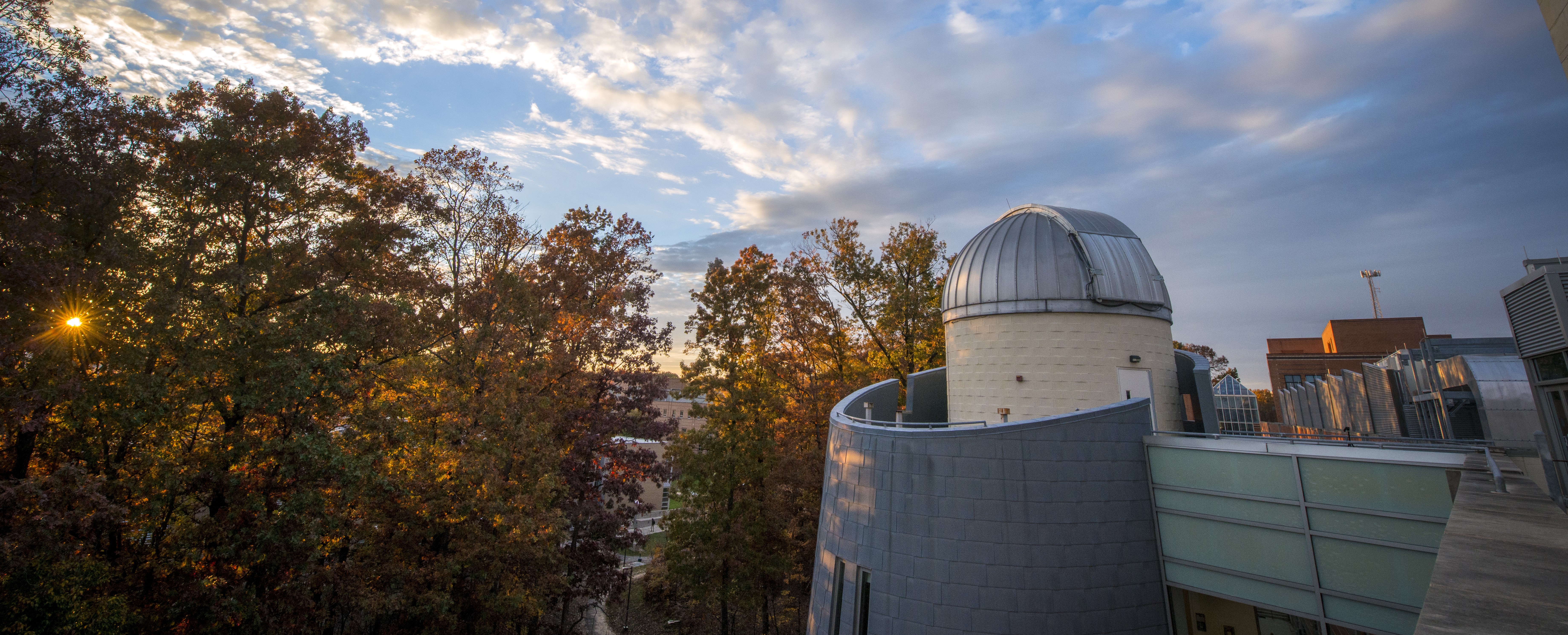
The George Mason Observatory, located on the Fairfax Campus of George Mason University, is a space where research, education, and public service come together under the stars. Operated by the Department of Physics and Astronomy in the College of Science, the observatory provides students and the community with unique opportunities to explore astronomy through hands-on experience with professional-grade equipment.
Visit the Observatory
Each week, the observatory opens its doors to the campus and local community. Public tours, group visits, and special events offer immersive experiences that bring the universe closer to home.
Visitor Guidelines
The George Mason University observatory is primarily an outdoor facility. We recommend checking the weather forecast in advance and dressing appropriately for outdoor conditions. For safety, we strongly encourage all visitors to wear closed-toe shoes.
Please note that the observatory dome is not fully accessible. If you have any accessibility needs, contact us at GMUObservatory@gmail.com prior to your visit so that we can provide more detailed information and support your experience.
The closest parking is the Shenandoah Parking Deck, across from Research Hall. Please see the parking website for additional parking information.
To maintain optimal viewing conditions, the dome remains as dark as possible during telescope use. We kindly ask that visitors refrain from using white light sources in dark areas. This includes, but is not limited to:
- Phone screens
- Flashlights
- Flash Photography
- Light-up shoes
Photography is welcome in and around the facility. However, please avoid using flash in dark areas such as the dome while observing is in progress. We also ask that visitors obtain permission before photographing observatory staff.
Smoking and vaping are not permitted on the observatory roof or within any observatory facilities.
Weapons, alcohol, drugs, and motorized vehicles are prohibited.
Children must be accompanied by a parent or guardian at all times.
Please be respectful toward all observatory staff members and fellow visitors.
Public Tours and Telescope Viewings
George Mason’s observatory offers free public tours on Mondays, Wednesdays, and Saturdays throughout the academic year, weather permitting. These tours are available for guests of all ages. No pre-registration is required to attend.
September 28th - October 28th: 8:30pm - 9:30pm
(There will be no tour on 10/31)
November 2nd - November 21st: 6:30pm - 7:30pm
(There will be no tours 11/22 - 11/28)
November 30th - December 5th: 6:30pm - 7:30pm
When weather conditions are favorable, we offer open-dome tours. During these sessions, guests can view the night sky using our fully operational 32-inch Ritchey–Chrétien telescope, one of the largest on the East Coast accessible to the public.
If poor weather prevents live viewing, we host closed-dome tours, which still provide an educational experience. Visitors can see the telescope up close, learn how it operates, and engage with topics such as astrophotography, observational techniques, and current astronomical research.
Poor weather conditions include humidity over 80 percent, wind speeds over 20 miles per hour, precipitation, heavy cloud cover, or nearby wildfire smoke.
Tours will be cancelled for forecasted thunderstorms.
Tours begin promptly, and we recommend arriving a few minutes early. Please meet your guide at the reception area just inside Research Hall, near the building’s main elevators.
These tours are not intended for GMU students enrolled in an Astronomy Lab course (ASTR 112/114).
Evenings Under the Stars Planetarium Shows
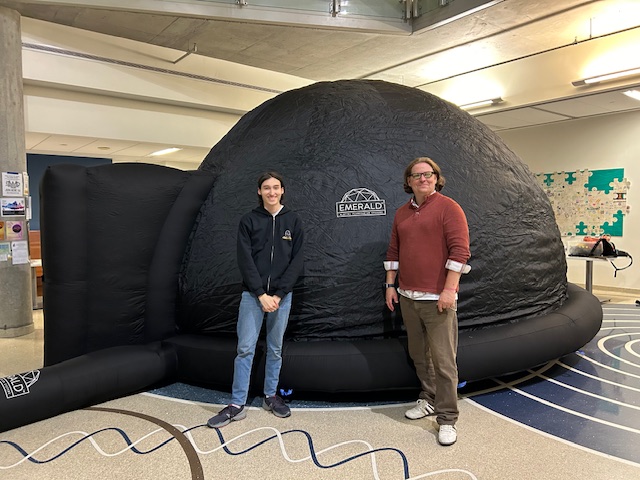
Evenings Under the Stars are held on select Saturdays and include a free 15-minute planetarium presentation. The event takes place in the atrium of Exploratory Hall (under the prehistoric whale skeleton). Space is limited and advance sign-up is required.
The planetarium environment is kept dark for optimal viewing and may include flashing lights. If you are sensitive to these conditions, we recommend attending a different public event.
This event is not intended for scout groups or large parties. If you would like to schedule a visit for a group, please contact us in advance to arrange a private tour.
This event only includes a planetarium show and is separate from our telescope viewings. For information about how to visit the observatory, please see the "Public Tours" tab.
Upcoming Evenings Under the Stars:
Spring 2027 Schedule TBD
Private Group Visits
At this time, we are only processing tour requests for groups that submitted the Fall 2026 Interest Form.
We offer free private tours for scout troops, school groups, and community organizations. These visits include a tour of our facility, telescope viewing, and an explanation of our current research and astrophotography projects. The maximum tour capacity at this time is 50 people. Private tours are typically scheduled for 1 hour.
Due to scheduling limitations, we are only able to schedule private tours during the current George Mason semester. For private tour requests for Spring 2027, please check back when GMU classes resume in January.
When weather conditions are favorable during an evening tour, we offer a view of the night sky through our 32-inch Ritchey-Chrétien Cassegrain telescope, one of the largest on the East Coast accessible to the public. During a daytime tour, we offer a view of the sun through a Hydrogen-Alpha filtered telescope.
If poor weather prevents live viewing, we host closed-dome tours, which still provide an educational experience. Visitors can see the telescope up close, learn how it operates, and engage with topics such as astrophotography, observational techniques, and current astronomical research.
Poor weather conditions include humidity over 80 percent, wind speeds over 20 miles per hour, precipitation, heavy cloud cover, or nearby wildfire smoke.
Tours will be cancelled for forecasted thunderstorms.
For Teachers and Community Leaders
At this time, we are only processing tour requests for groups that submitted the Fall 2026 Interest Form.
We offer free private tours for school groups and community organizations. These visits include a tour of our facility, telescope viewing, and an explanation of our current research and astrophotography projects. For additional details related to an observatory field trip, please see the "Private Group Visits" tab.
Our portable planetarium can be brought to schools for STEM Nights or after-school activities. We are not able to provide planetarium shows at the GMU Campus or provide planetarium shows during school hours due to our staff members' class schedules.
Due to scheduling limitations, we are only able to schedule private tours during the current George Mason semester. For private tour requests for Spring 2027, please check back when GMU classes resume in January.
Summer Camp
We are working with the Mason Space Exploration Center to provide a space-themed summer camp experience for rising 4th through 9th grade students. We offer camp at George Mason University's Fairfax and Manassas campuses. For more information, please visit: MSEC Homepage
Support the observatory!
The George Mason Observatory is financially supported by the Department of Physics and Astronomy and donations from people like you! Donations help us purchase everything from professional-grade imaging equipment to the shows we play in our planetarium.
To direct your gift, select College of Science under Designation, then choose Astronomy Observatory and Educational Activities.
Quick Facts
1,000+
The observatory allows over 1,000 people every year to view the cosmos and learn from experts
32"
Our primary telescope is 32" in diameter, making it one of the largest campus telescopes on the East Coast!
About Our Facility
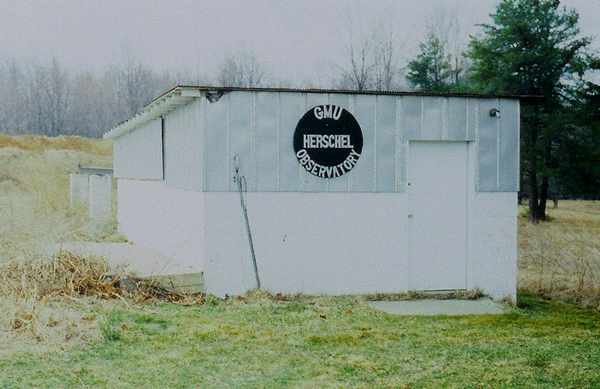
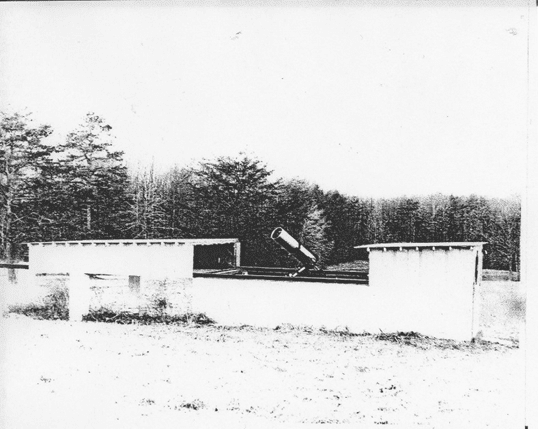
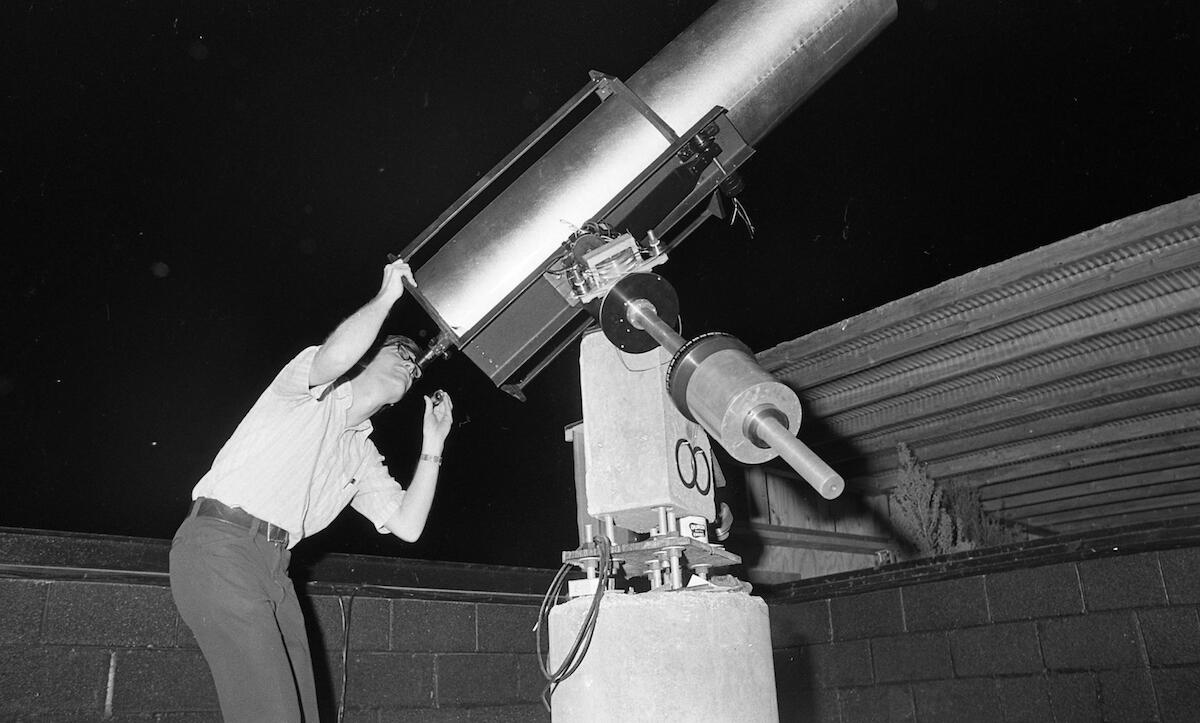
The first of George Mason University's observatories officially opened on October 6, 1975, with construction beginning in 1972. Though informally known as the Herschel Observatory by the Department of Physics, this name was never officially adopted. The observatory was built by students John Whalan, Chipper Peterson, and Bob Veenstra, under the supervision of Bill Lankford.
In the fall of 1975, Menas Kafatos took over supervision of the Herschel Observatory. Located in a pig shed adjacent to the Mallory House, across Route 123 from the main campus, the observatory was eventually dismantled to make way for the Field House. A second observatory was then constructed on the athletic fields but was ultimately demolished by 1980.
For decades, there were plans to establish a new observatory at George Mason, with proposed sites including the rooftops of Science and Technology I (Planetary Hall), Science and Technology II (Exploratory Hall), and Academic IV (Innovation Hall). In 1982, a petition circulated by Harold Geller was received by then-President Johnson, highlighting the need for a new observatory. Despite strong support from faculty like Lankford, Kafatos, Lieb, Ellsworth, Ehrlich, Becker, Wallin, Geller, and Dworzecka, as well as administrators such as Provost Stearns, Vice-Provost Hill, Dean Struppa, and Dean Kafatos, financial constraints continually halted progress.
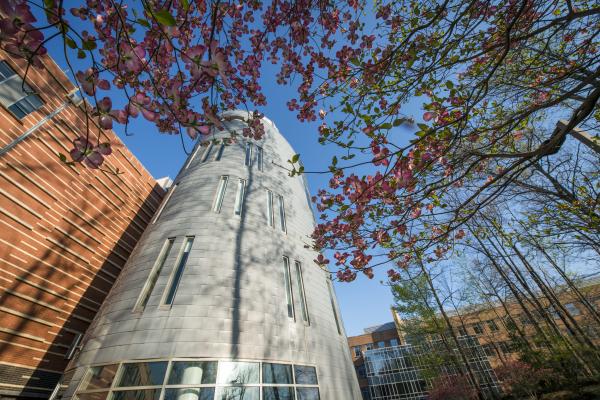
Today, George Mason University proudly hosts its observatory atop Research Hall on Fairfax Campus. The Research Hall observatory features an impressive collection of telescopes, including a 32-inch Ritchey-Chrétien Cassegrain reflector. Like its predecessor, the modern observatory is heavily utilized for public outreach events. As Kafatos predicted in a 1978 interview with Mason’s Broadside, the observatory serves as a valuable resource for the community.
Telescopes and Equipment
The George Mason Observatory houses one of the largest university-operated telescopes in the region, a 32-inch Ritchey-Chrétien reflector. This telescope allows for both visual observation and digital imaging.
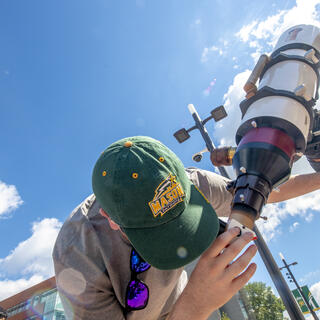
In addition to our primary telescope, we operate a range of portable telescopes and observing tools, including:
- 8-inch and 12-inch Schmidt-Cassegrain telescopes
- 152-millimeter hydrogen-alpha solar telescope
- 16-inch Dobsonian telescope
- SBIG STX-16803 CCD
Our Mission
At George Mason observatories, our mission is to inspire curiosity, foster scientific understanding, and ignite a passion for the wonders of the universe among individuals of all ages and backgrounds. We aim to be a leading public observatory and planetarium dedicated to providing enriching educational experiences, engaging outreach programs, and awe-inspiring opportunities for celestial exploration.
Our Pillars
Education and Outreach
We strive to be a hub of astronomical knowledge by providing accessible and engaging educational programs, workshops, and interactive exhibits. Our commitment to diverse learning opportunities ensures that individuals of all ages and abilities can explore the marvels of space and develop a deeper appreciation for the cosmos.
Stargazing and Observations
As a premier university observatory, we offer advanced telescopes and equipment that enable visitors to observe celestial events, planets, stars, and other astronomical phenomena with clarity and precision. Our team members guide guests through stargazing experiences that foster a meaningful connection between humanity and the universe.
Planetarium Shows and Immersive Experiences
The observatory’s digital planetarium presents immersive shows that transport audiences to the far reaches of the universe. Through the use of storytelling and cutting-edge technology, we offer memorable experiences that bring astronomical concepts to life and inspire curiosity and exploration.
Scientific Research and Discovery
We are committed to advancing astronomical research and contributing to the global scientific community. Our collaborations with astronomers and academic institutions support innovative research and ensure that our programs reflect the latest developments in space science and exploration.
Community Engagement
We engage with both local and global communities to promote inclusivity and diversity across all programs. The observatory is a welcoming and inclusive space where people from all backgrounds are invited to celebrate and explore the cosmos together.
Conservation of Dark Skies
We recognize the importance of preserving natural nightscapes and reducing light pollution. Through educational initiatives and public programs, we raise awareness about the effects of light pollution on both astronomy and the environment and advocate for sustainable lighting practices.
Conservation of Earth’s Orbital Environment
We acknowledge the increasing risks posed by orbital debris and the expanding commercial satellite industry to both ground-based astronomy and life on Earth. The observatory supports efforts to raise public awareness, promote technical solutions, and encourage responsible policy that protects Earth’s orbital environment.
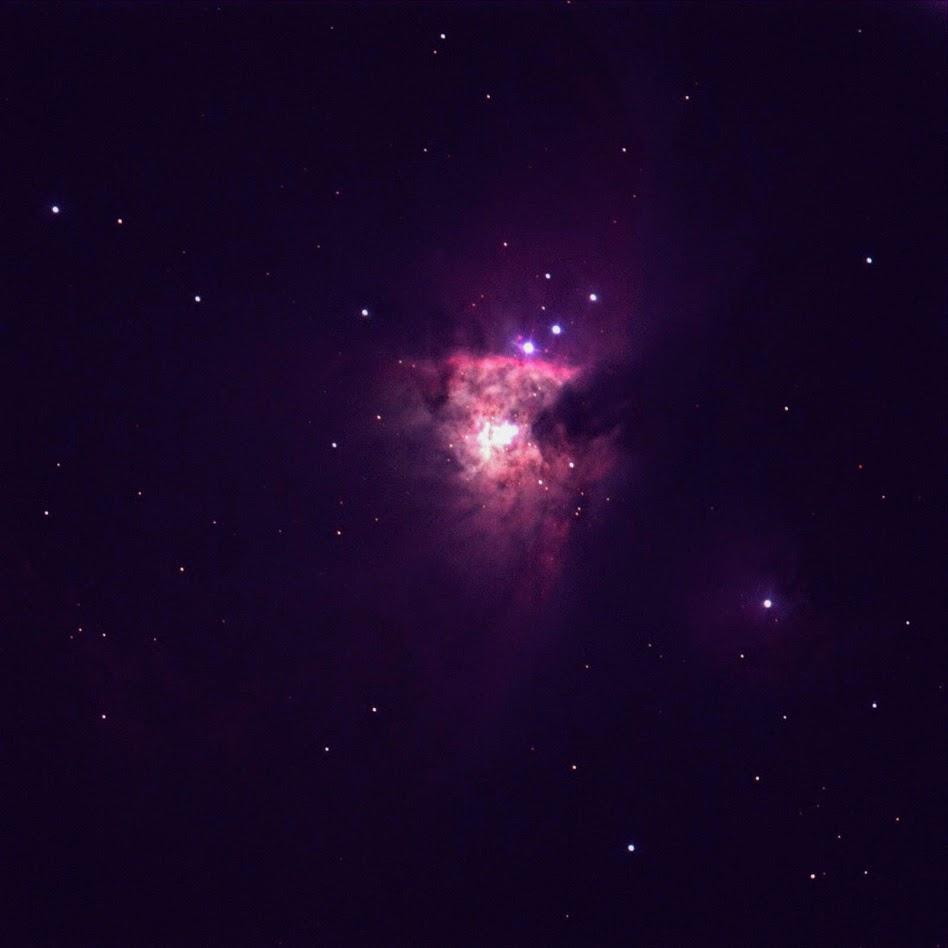
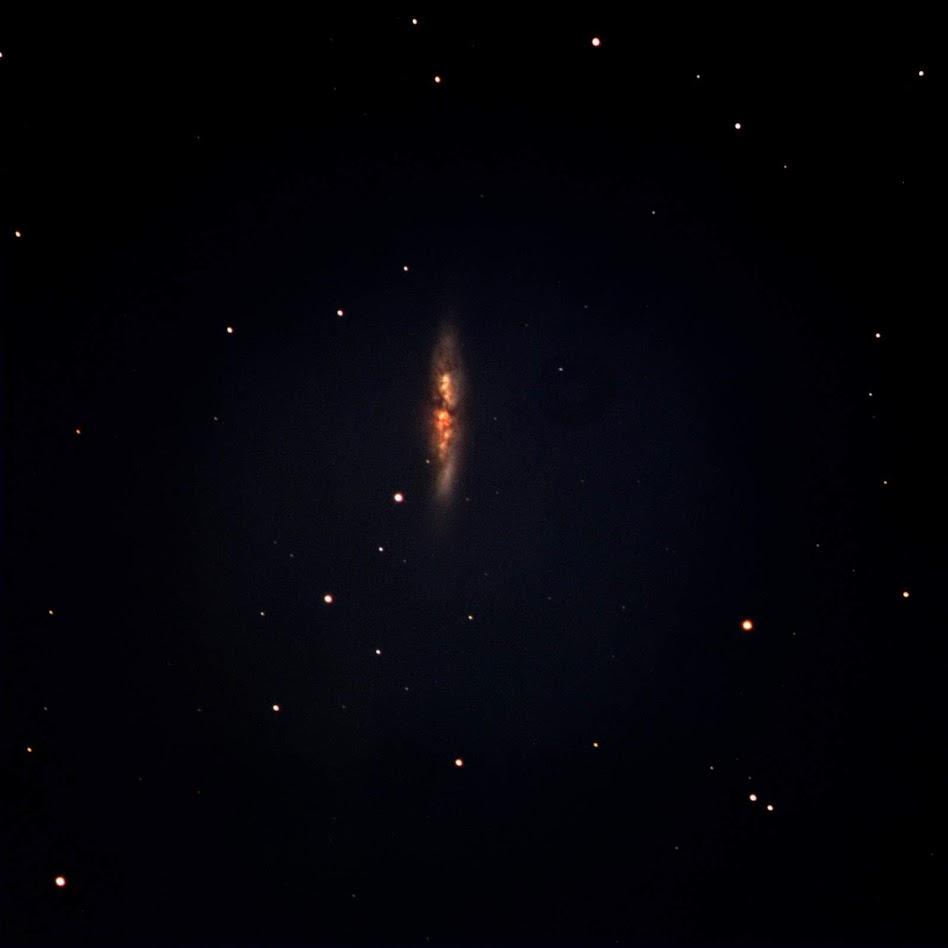
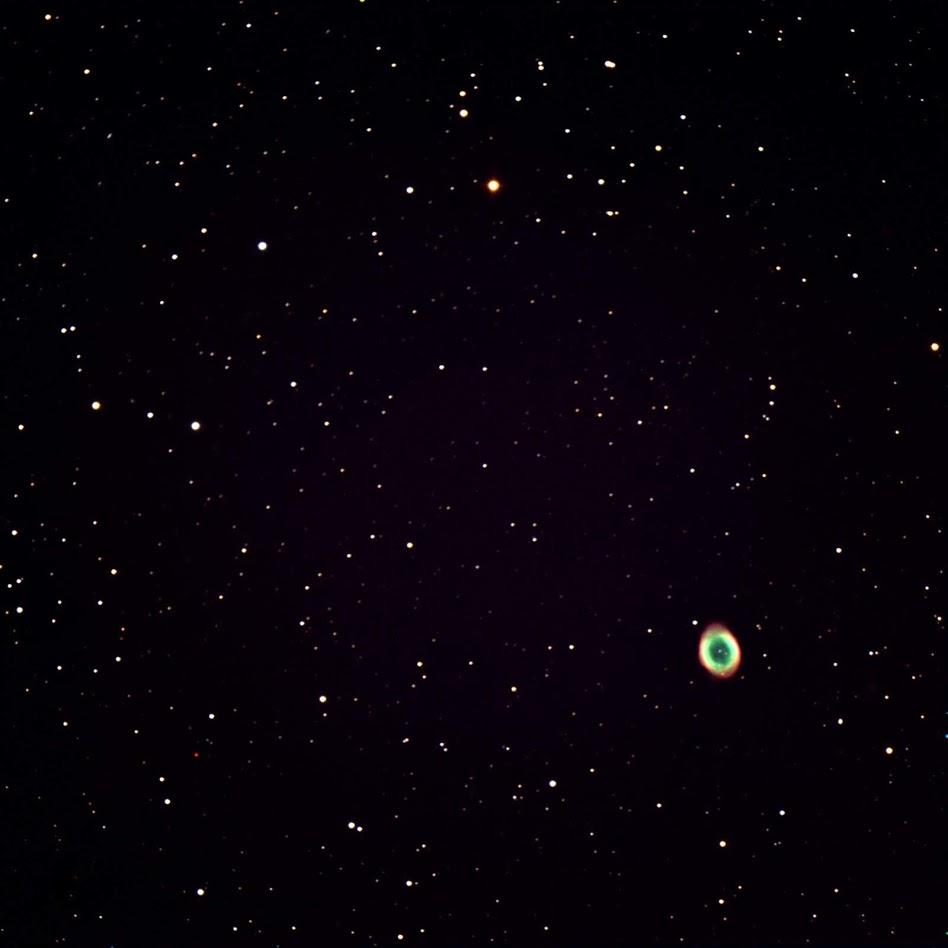
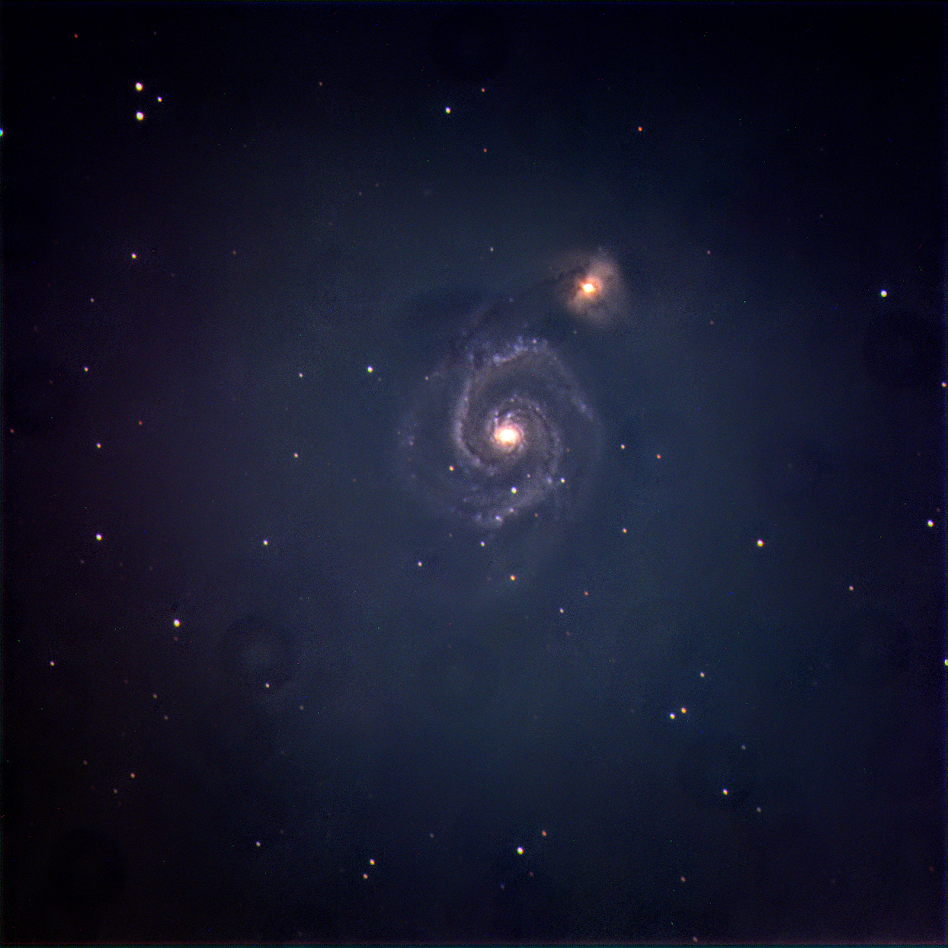
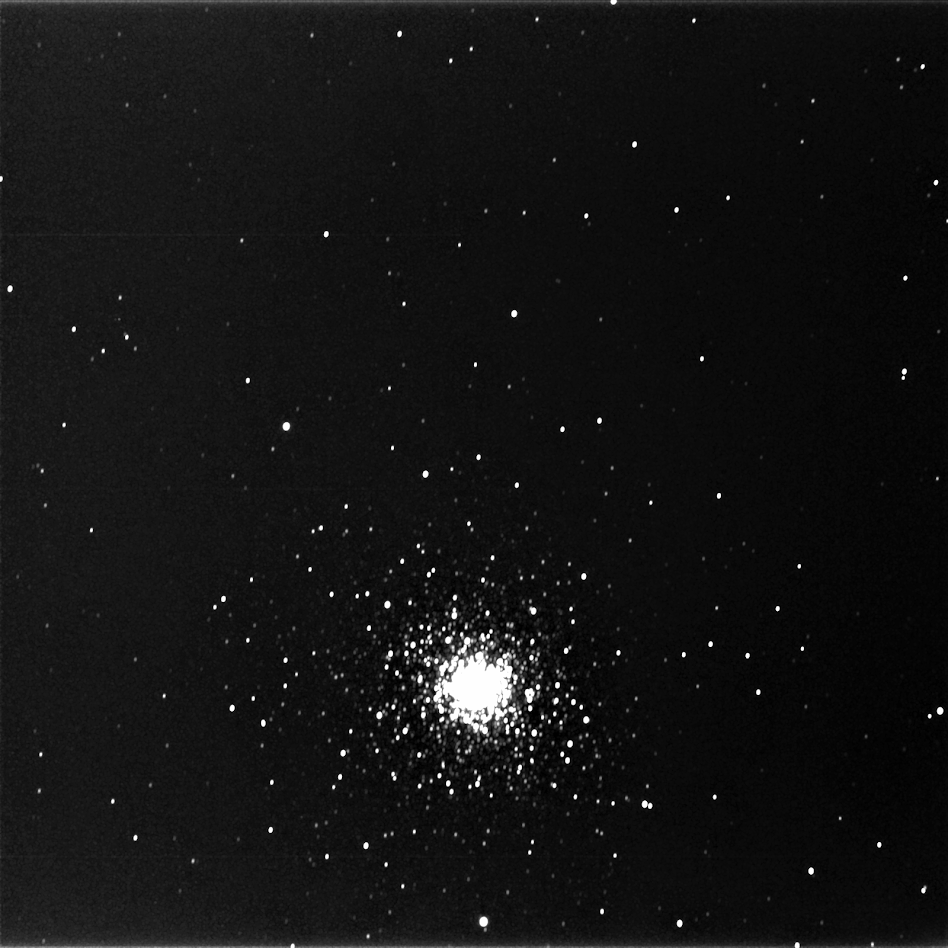
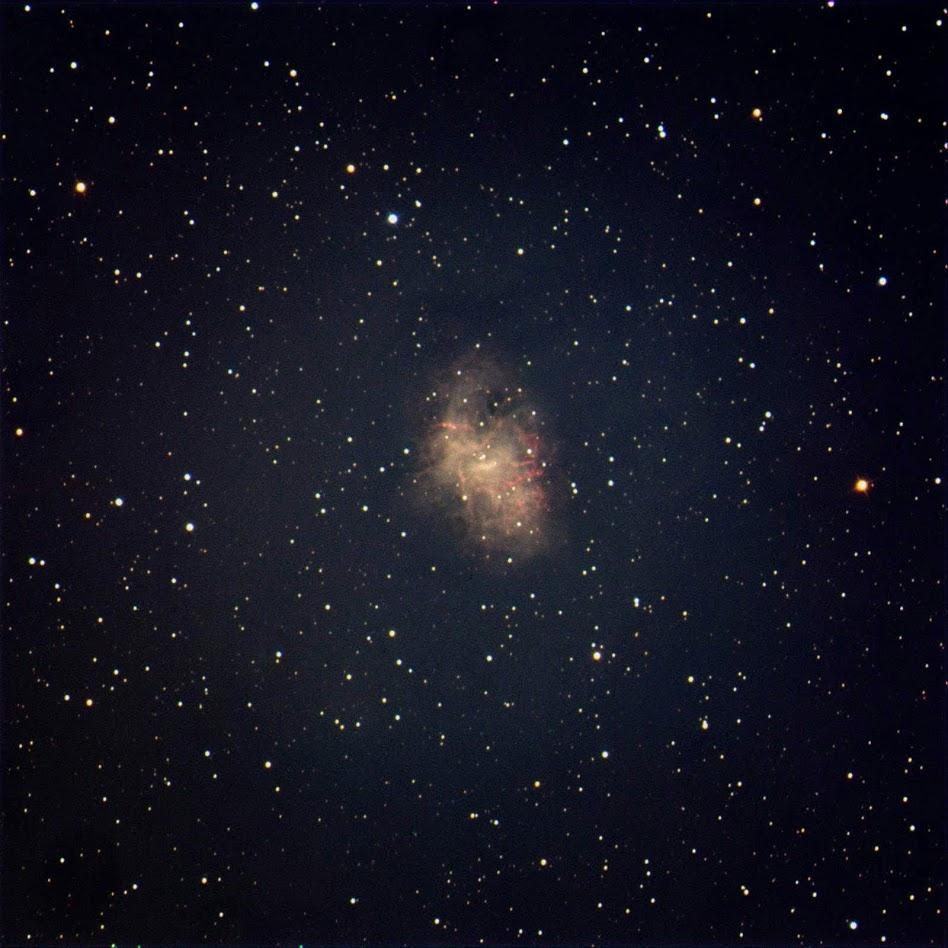
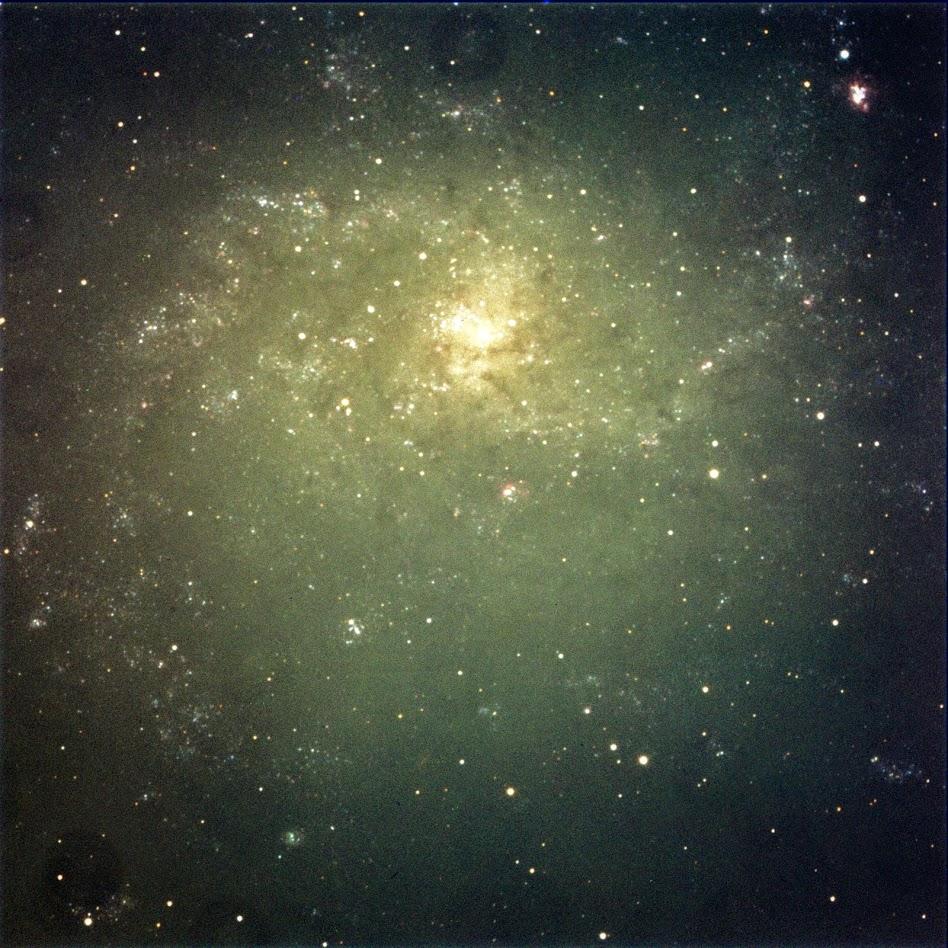
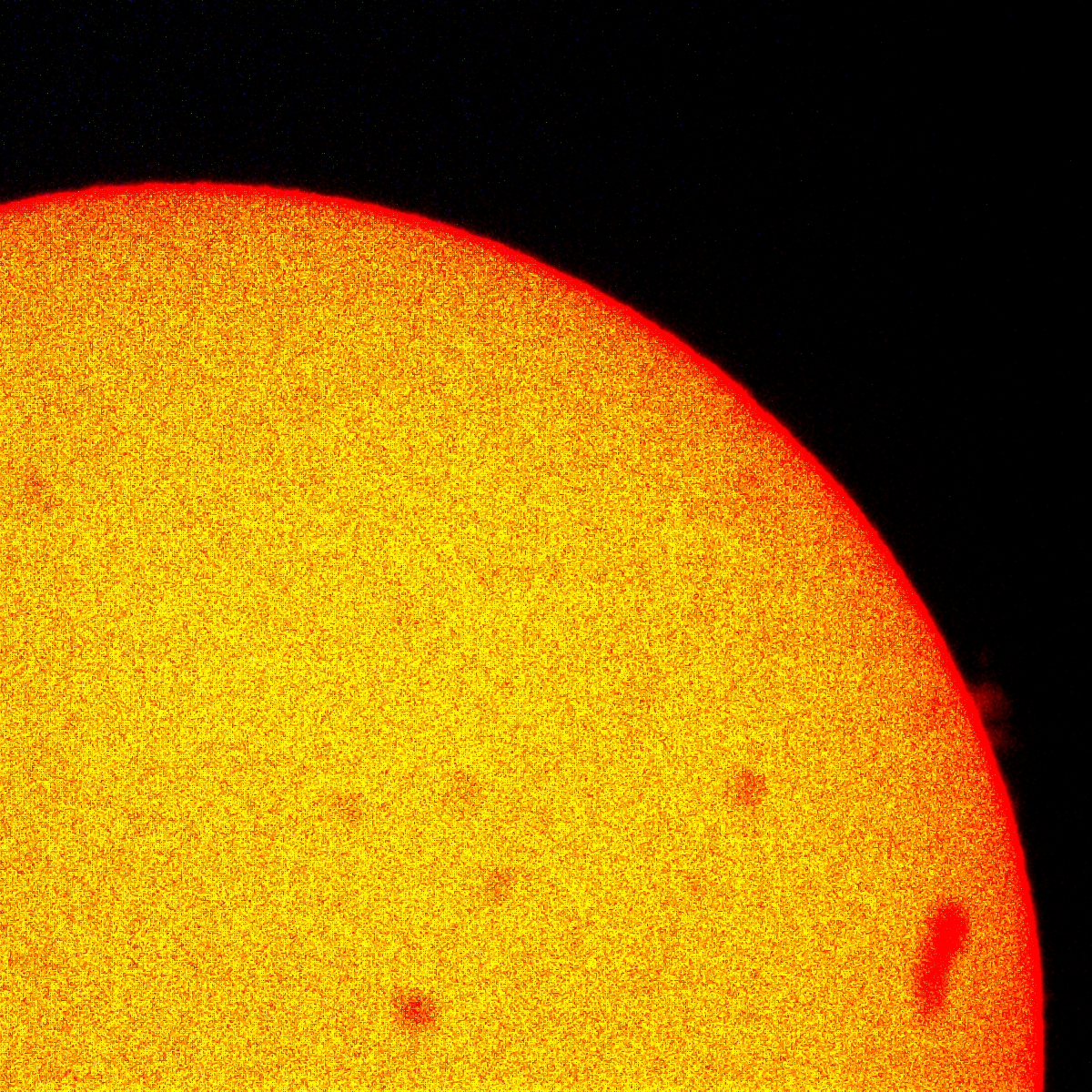
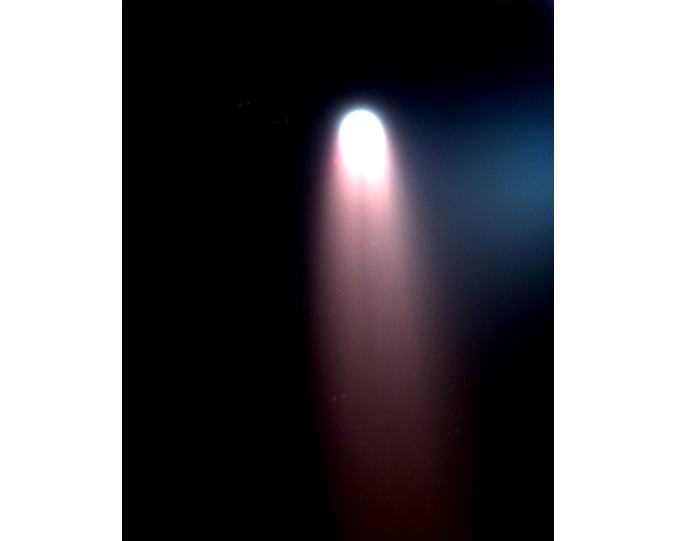
Objects Captured by Students Using Our Equipment
All images of objects above were captured using our SBIG STX-16803 CCD with the appropriate filters. All images are property of Mason, please contact us for usage permissions.
For information regarding the following, please visit us at our auxiliary website:
- Archives of the MOON newsletter and Evening Under the Stars recordings
- Making a Donation
- and our full Image Gallery