Grand Challenge Initiative: Space Exploration
Pioneering space exploration, research, and collaboration
At the forefront of scientific discovery, we are advancing space innovations that support Earth observation, planetary exploration, and space weather prediction. Our interdisciplinary research fuels technological breakthroughs, enhances our understanding of the universe, and provides critical tools to safeguard infrastructure, communication systems, and communities around the globe. Through collaboration with academic, industry, and government partners, we are shaping the future of space science to benefit life on Earth and beyond.
The Department of Physics and Astronomy at George Mason University is a dynamic hub for scientific discovery and innovation.
Combining analytical training, hands-on learning, and collaboration with partners such as NASA, NIST, the Naval Research Lab, and Jefferson Lab. George Mason also leads in Earth and space research through the Center for Satellite and Earth Science Research (CSER) and the Center for Earth Observing and Spatial Research (CEOSR). CSER advances remote sensing and Earth system science with policy-relevant insights and early warning tools that strengthen environmental resilience, while CEOSR drives innovation in satellite data acquisition, processing, and geospatial analysis for applications ranging from natural hazards to disaster management and geospatial intelligence.
Together with community outreach, such as our on-campus observatory, which welcomes over 1,000 visitors annually, George Mason promotes scientific literacy and exploration. The Mason Space Exploration Center (MSEC) further enhances this ecosystem by offering immersive STEM experiences that inspire the next generation of space explorers.
Landolt Space Mission
George Mason University hosts the $19.5 million NASA Landolt Space Mission, launching an artificial “star” into orbit in to calibrate telescopes and improve measurements of stellar brightness. The mission, a collaboration with NASA, NIST, and leading institutions, aims to refine our understanding of the universe’s expansion.

George Mason Scientist Part of NASA EDGE Mission to Track Earth’s Changing Ice and Forests
A George Mason University scientist is helping NASA measure changing ice and forests with a newly selected satellite mission. Konrad Wessels, associate professor of geography and geoinformation science, is part of a NASA-funded science team that developed a new mission concept for studying how ice levels and ecosystem carbon stock are changing—work that could impact climate resilience planning, disaster management, ocean navigation, and national security.
Space Experts
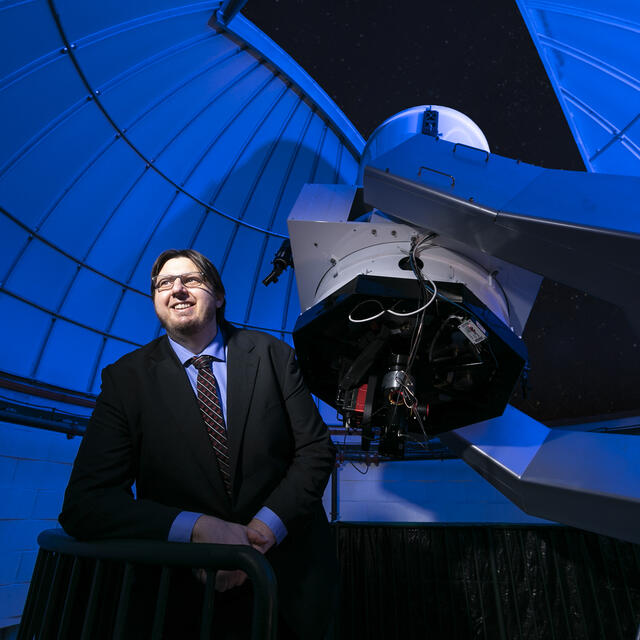
Peter PlavchanAssociate Professor, Physics and Astronomy
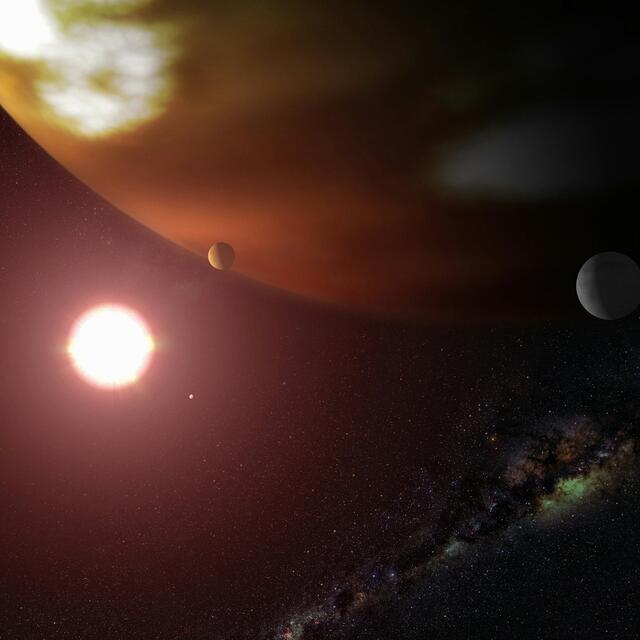
Peter Plavchan, Associate Professor and Executive Director of the George Mason Observatories, is an observational exoplanet astronomer. His research focuses on the formation and demographics of planets around cool, low-mass stars, using radial velocity and transit methods. He led the discovery of the AU Mic planetary system (published in Nature), and is Principal Investigator of NASA’s Landolt mission and HaZE mission concept, as well as the EarthFinder Probe Mission concept. Plavchan has built instrumentation for the NASA Infrared Telescope Facility, is Co-PI of the MINERVA-Australis telescope array, and has contributed to missions including Spitzer, Kepler, TESS, and JWST. His work is supported by NASA, NSF, and the Mt. Cuba Astronomical Foundation.
Anamaria Berea (Panelist)Associate Professor, Computational and Data Sciences
Anamaria Berea is an associate professor of Computational and Data Sciences. She also serves as an affiliate faculty member and super mentor for the Frontier Development Lab (FDL), affiliated with the SETI Institute. In addition, Berea is a research investigator and elected Scientist Representative for the Blue Marble Space Institute of Science (BMSIS), an affiliate of the Post-Detection Hub at the University of St. Andrews. She is also a member of the International Astronautical Federation's Permanent SETI Committee and serve as Mission Head at the Interstellar Foundation. A recipient of a NASA award, she led the ASPIRE One mission to the Moon. Her current research lies at the intersection of artificial intelligence and space sciences, with a particular focus on astrobiology. Berea's work includes computer simulations of human teams and habitats in extreme environments (such as the Moon and Mars), studies on universals of communication for deep space contexts, and the development of AI applications for detecting biosignatures and technosignatures.
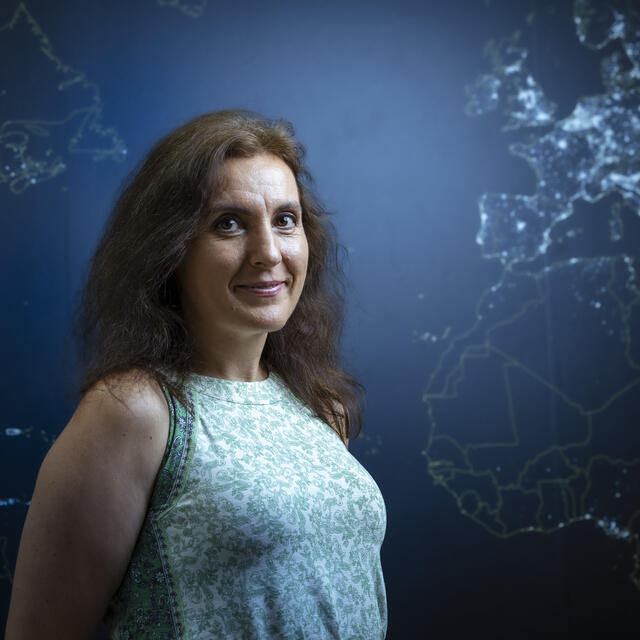
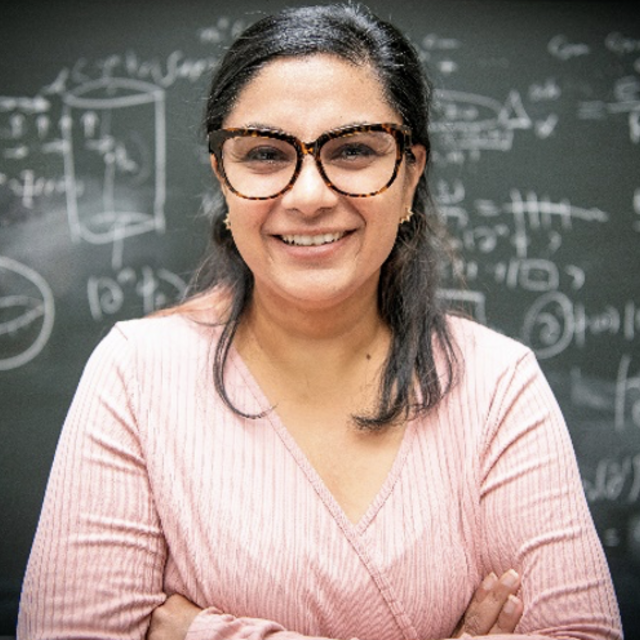
Ferah MunshiAssistant Professor, Physics and Astronomy
Ferah Munshi is an astrophysicist and dark matter hunter exploring some of the universe’s most elusive mysteries. As a Simons Emmy Noether Fellow and recipient of the COS Dean’s Early Career Excellence Award (2025) at George Mason University, her work bridges theory, computation, and observation to understand the invisible (dark) matter shaping galaxies and cosmic structure. Passionate about asking questions at the edge of the known, Munshi challenges how we define discovery when the universe refuses to reveal its secrets easily. Beyond research, she is committed to expanding who gets to participate in science and how bold ideas are cultivated in academia. Through her work, she invites us to rethink what it means to search for something we cannot see—but know must exist.
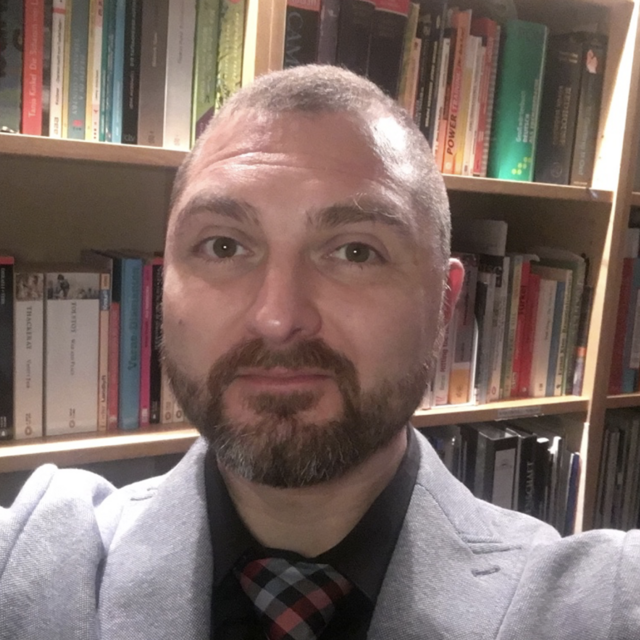
Erdal YiğitAssociate Professor, Physics and Astronomy
Erdal Yiğit is an associate professor in the Department of Physics and Astronomy. His research interests cover topics from atmospheric, space and planetary sciences, in particular, global modeling of and internal wave effects in planetary atmospheres, such as, Earth and Mars. He is the developer of the first whole atmosphere gravity wave parameterization suitable for general circulation models of planetary atmospheres. He is the recipient of the 2016 Zeldovich Medal jointly presented by COSPAR and the Russian Academy of Sciences for his significant contributions to the study of coupling between the lower and upper atmospheres on Earth and Mars by gravity waves. He is the sole author of the Springer's two-volume monograph series on "Atmospheric and Space Sciences" one on Neutral atmospheres and the second on Ionospheres and Plasma Environments.
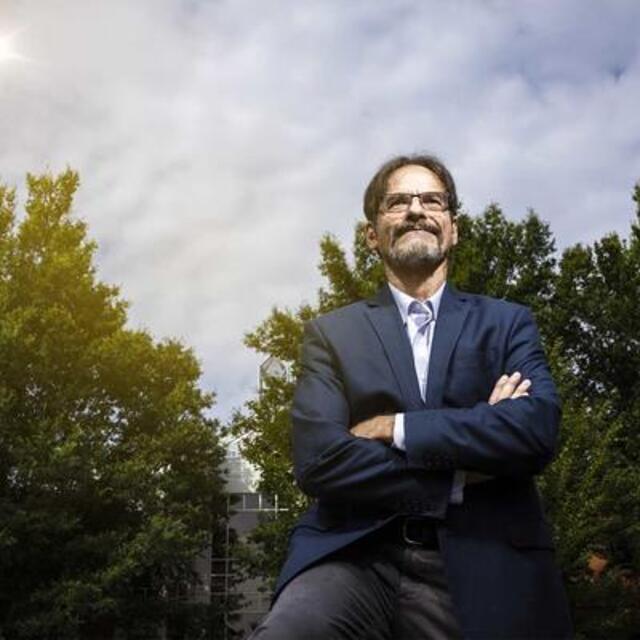
Peter BeckerProfessor and Director of International Collaborations, Physics and Astronomy
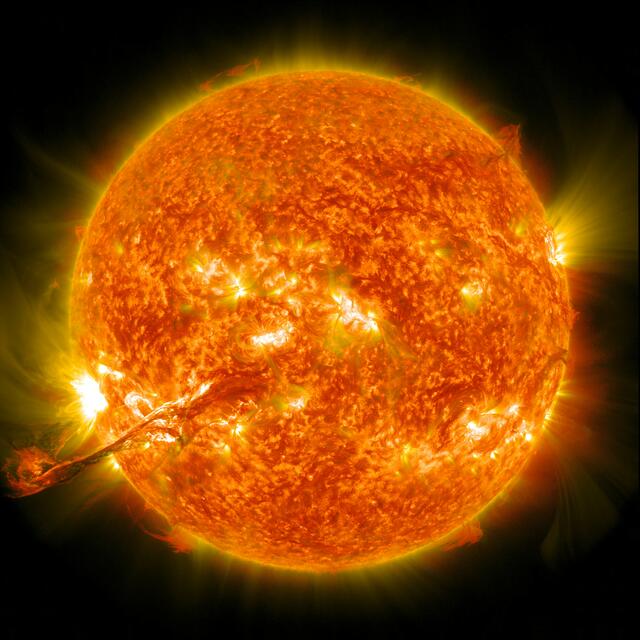
Peter Becker serves as an expert in solar research. He and a team of George Mason researchers work with the Department of the Navy to study and better understand increased solar activity that could potentially cause an “internet apocalypse,” disrupting all electronic communications on Earth, including satellite communications. He regularly speaks to media concerning how solar superstorms could affect internet access here on Earth.
NASA Partnerships
Partnering with NASA for more than 20 years to solve the world's most challenging problems.
What are the chances of intelligent life beyond Earth?
Anamaria Berea, Computational and Data Sciences associate professor, was featured on George Mason's Access to Excellence podcast. In this episode, Berea discusses her research on Mars settlements and Unidentified Aerial Phenomenon (UAP) as she and President Gregory Washington debate the question on everyone’s mind: is there life beyond Earth?

Advancing Exoplanet Research with NASA
George Mason alumna Natasha Latouf is a NASA Postdoctoral Program fellow at Goddard Space Flight Center, where she researches how to detect signs of life in exoplanet atmospheres. As a graduate student, she contributed to NASA’s BARBIE project and focused her dissertation on biosignature detection for the upcoming Habitable Worlds Observatory (HWO). Now, as HWO’s internship project officer, Latouf continues to shape the future of space science and mentorship.
George Mason Observatory
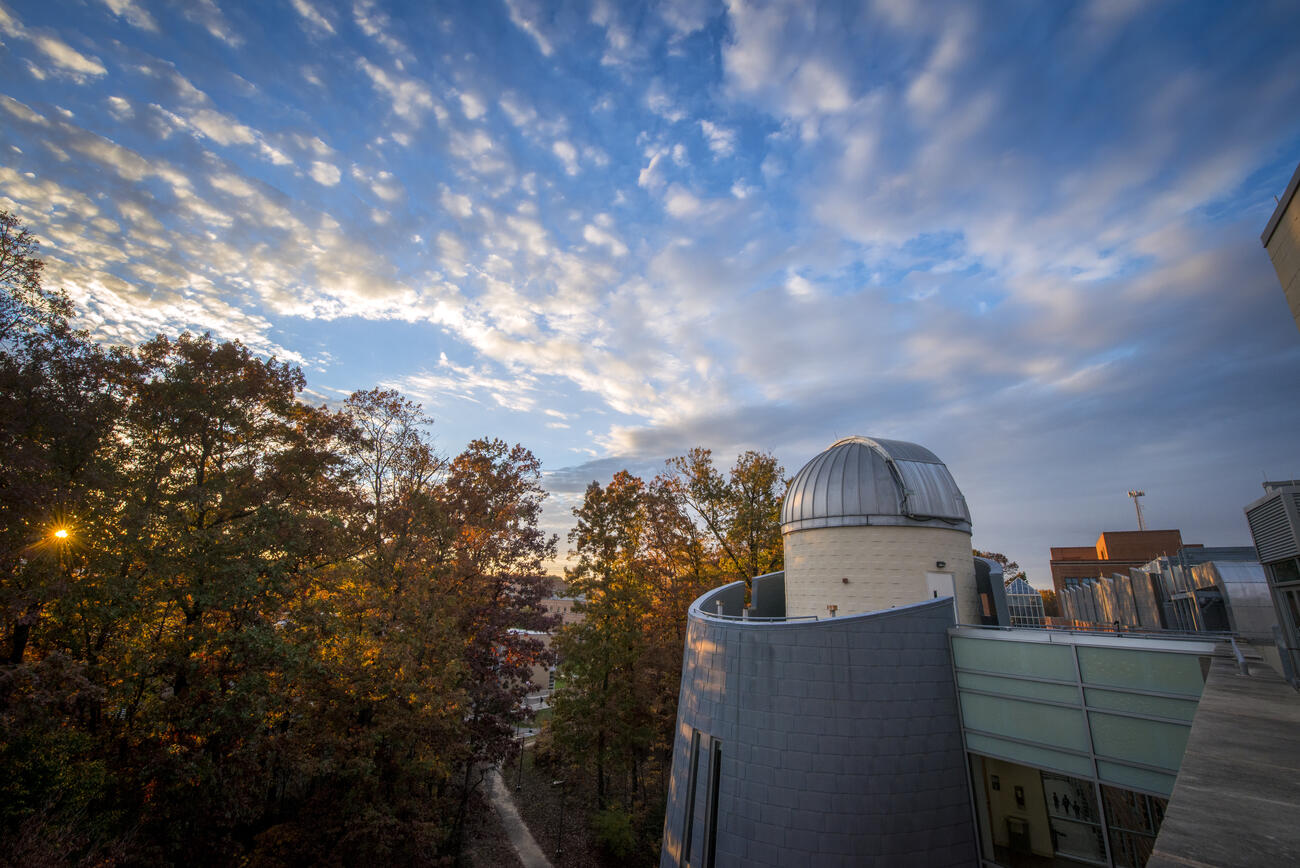
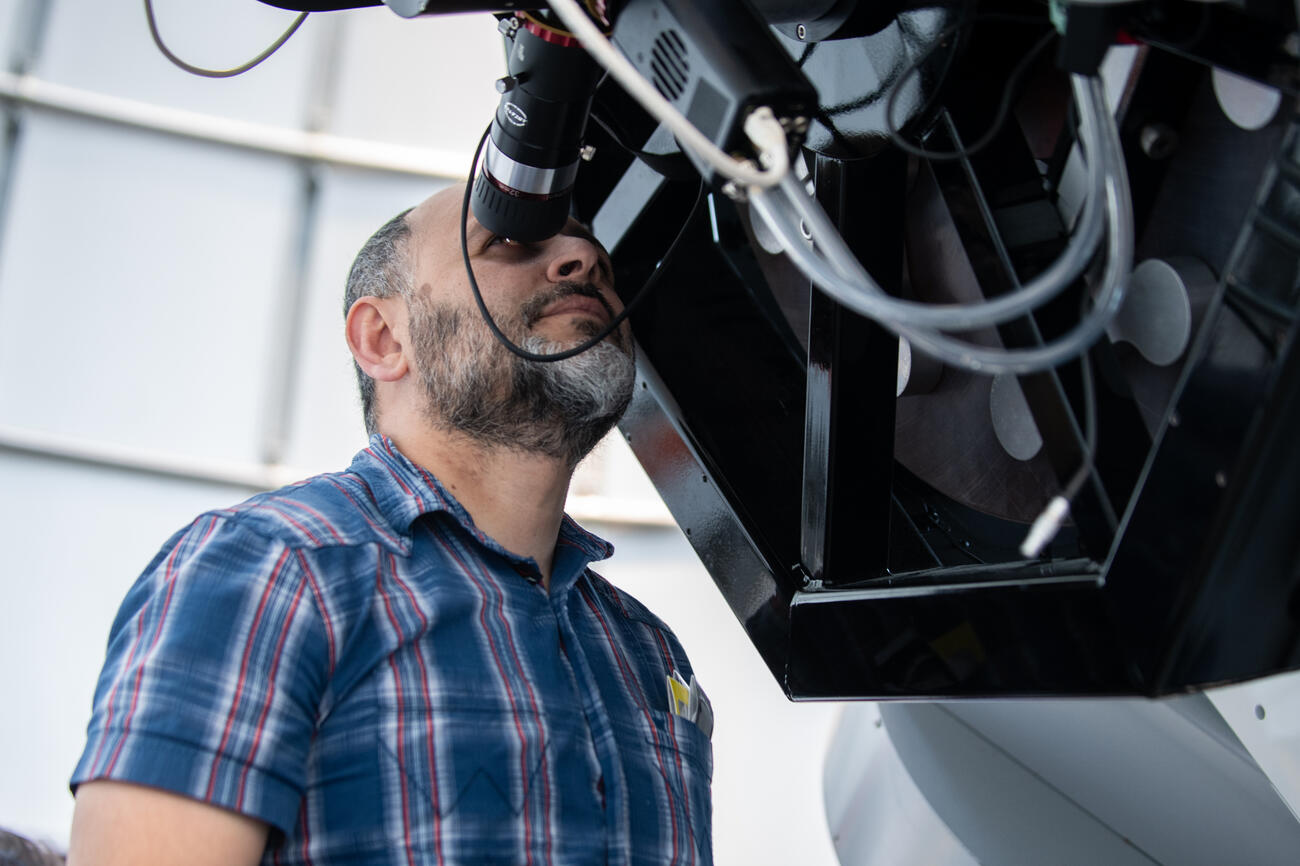
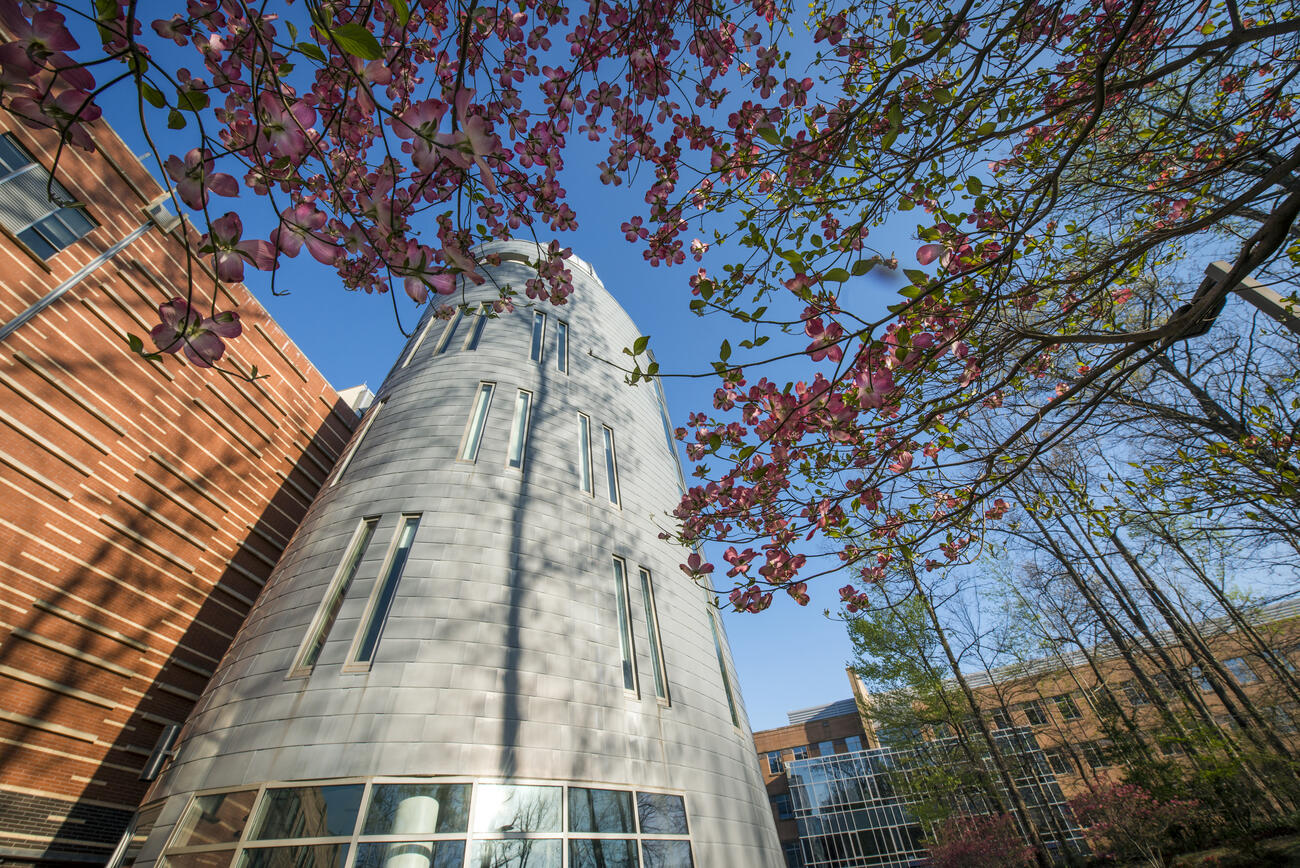
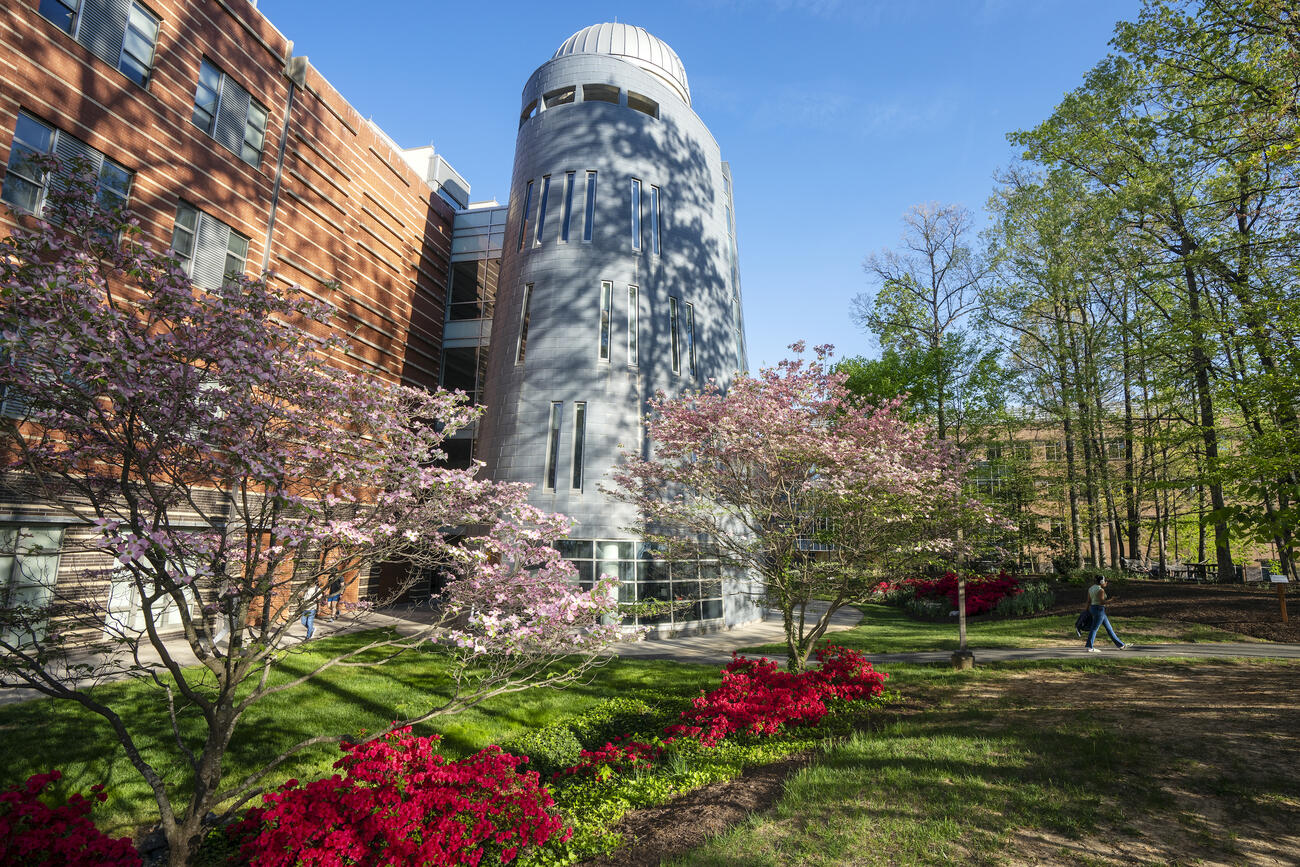
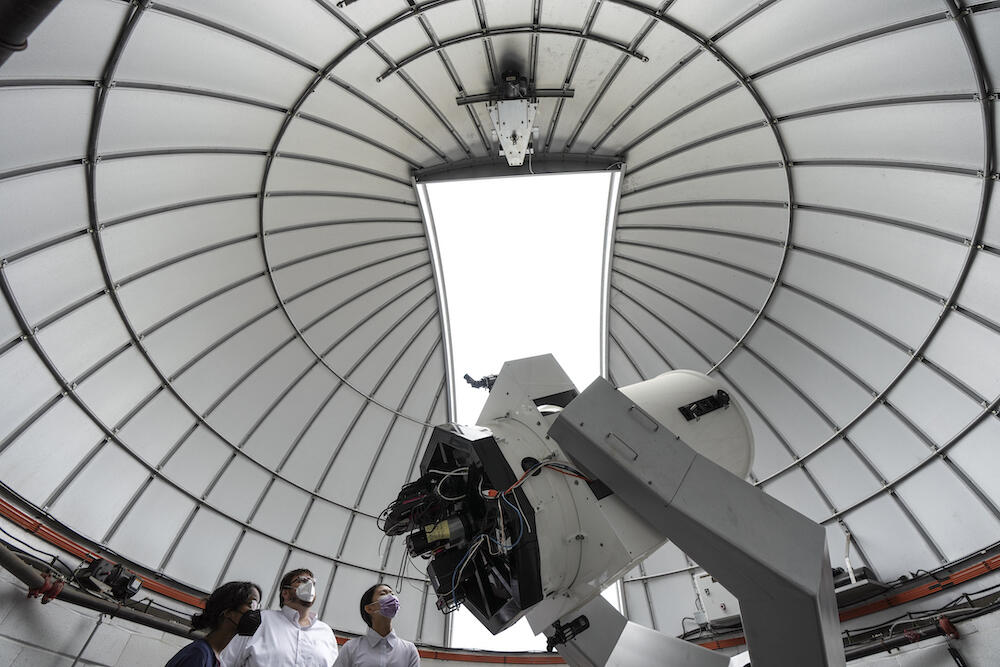
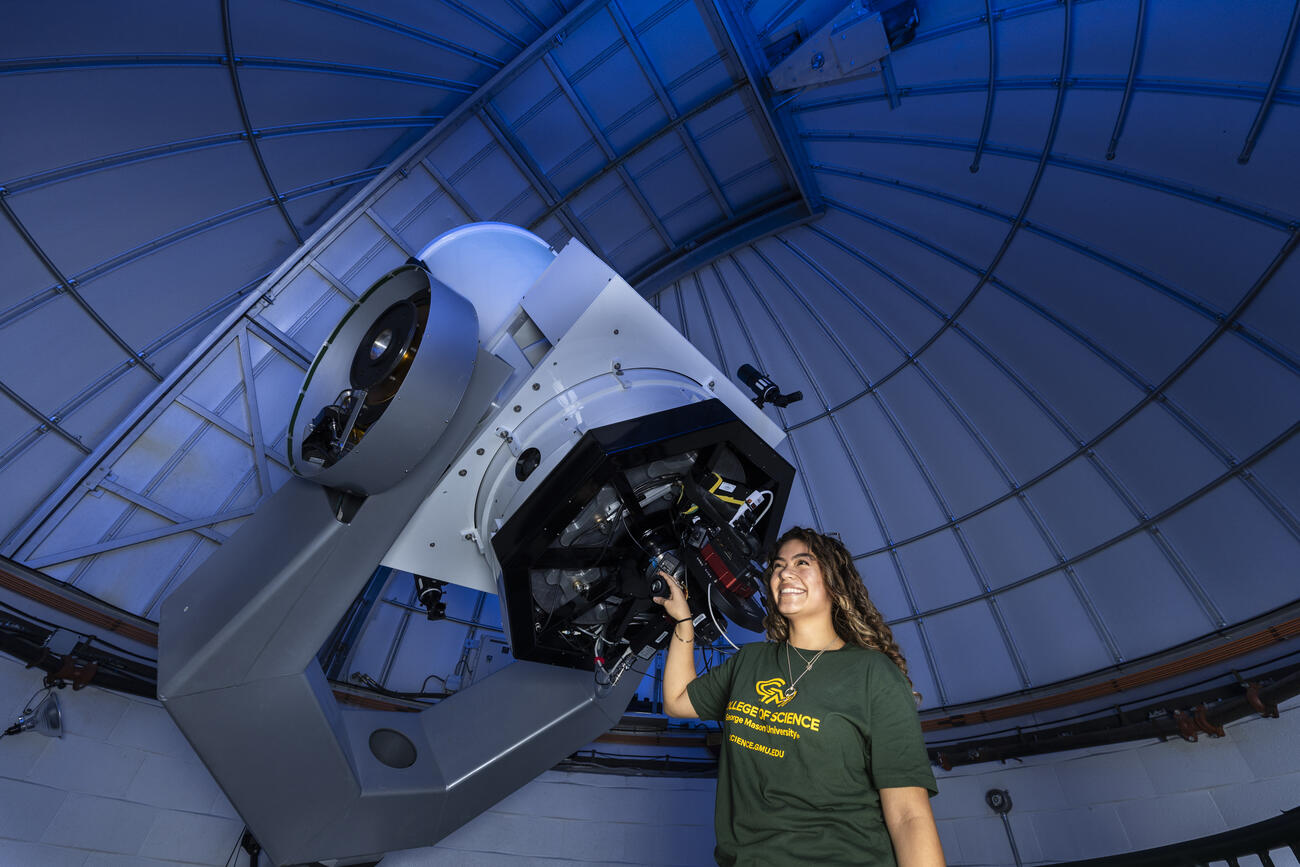
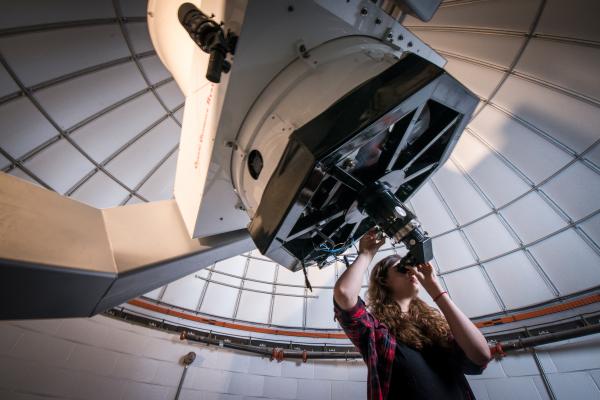
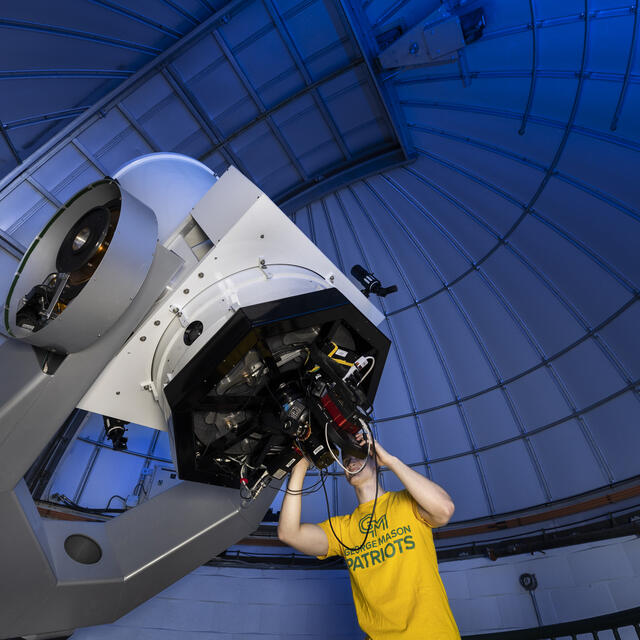
Located atop Research Hall on the Fairfax Campus, the George Mason Observatory is a vibrant hub where research, education, and public engagement meet under the stars. Home to one of the largest campus-based telescopes on the East Coast: a 32-inch Ritchey-Chrétien reflector.
The observatory offers hands-on access to professional-grade equipment for students and the public alike. Each year, over 1,000 visitors explore the cosmos through guided stargazing nights, immersive planetarium shows, and educational programming. Operated by the Department of Physics and Astronomy, the observatory is dedicated to inspiring curiosity, advancing scientific discovery, and connecting people of all ages with the wonders of the universe.