
Grand Challenge Initiative: Digital Innovation
Empowering a Smarter, More Innovative Future
Driving responsible digital innovation and sustainable infrastructure, George Mason University is at the forefront of harnessing artificial intelligence, emerging technologies, and advanced cyberinfrastructure to address critical human and environmental challenges. By integrating ethical innovation with sustainability, Mason researchers and students are developing solutions that not only advance technology but also ensure it benefits society, strengthens communities, and promotes a more equitable, intelligent future.

Advancing Digital Innovation Through Data, Modeling, and Geospatial Insight
Across George Mason University, departments are driving digital innovation through advanced research, data-driven discovery, and cutting-edge technology. In the Department of Mathematical Sciences, students and faculty apply rigorous quantitative methods to solve complex problems in applied and computational mathematics—building the theoretical foundations that underpin breakthroughs in artificial intelligence, modeling, and data analysis. The Department of Computational and Data Sciences (CDS) advances the science of data, developing new analytical techniques and computational tools that inform decision-making across industries and government sectors. Meanwhile, the Department of Geography and Geoinformation Science (GGS) leverages digital mapping, geospatial intelligence, and drone-based remote sensing to better understand our rapidly changing world. Each department plays a vital role in shaping Mason’s vision for responsible digital innovation—transforming data, algorithms, and spatial technologies into solutions that enhance sustainability, resilience, and global insight.
An Artificial Intelligence (AI) Nexus at George Mason
George Mason University is building a responsible, campus-wide AI ecosystem through its new AI2Nexus model, which integrates AI into education, research, operations, and community impact. The university is expanding AI-focused courses and programs while launching tools like the NebulaONE platform to give all students, faculty, and staff access to advanced generative AI models. With active partnerships across industry, government, and research organizations, Mason is positioning itself as a leader in ethical AI innovation and workforce development.
Advancing Neuromorphic Imaging and Digital Twins
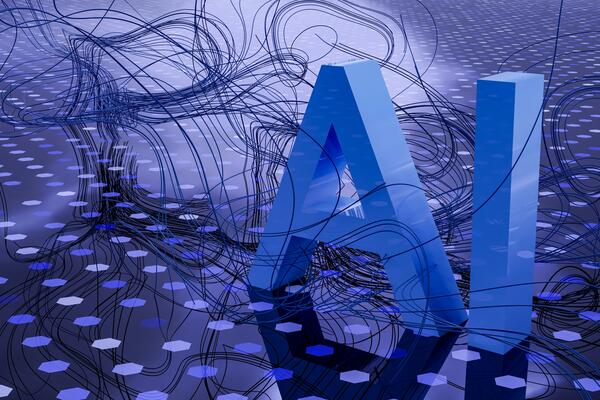
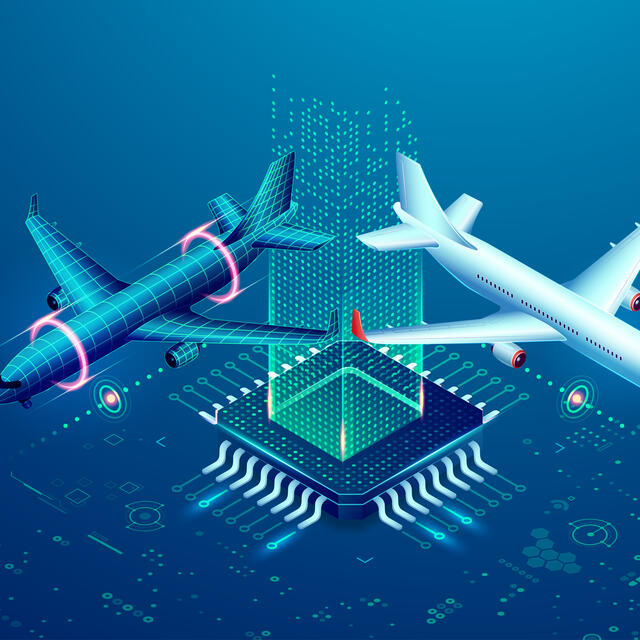
George Mason University received funding from the Air Force Office of Scientific Research to establish the nation’s first Neuromorphic Imaging and Digital Twins Lab under the Center for Mathematics and Artificial Intelligence, advancing next-generation optimization algorithms and sensing technologies. Led by Harbir Antil and Rainald Löhner, the lab supportx cutting-edge research in areas like object recognition, motion detection, and high-speed imaging, while serving as a shared resource for academia, industry, and government partners.

Breakthrough Detection of Fractional Quantum Hall Effect in Bilayer Graphene
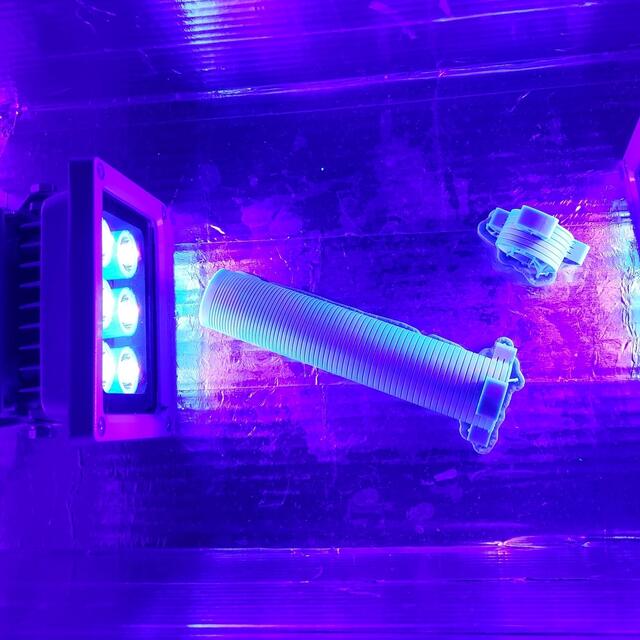
George Mason University researchers, led by physics and astronomy assistant professor Fereshte Ghahari, have achieved the first thermopower-based detection of the Fractional Quantum Hall effect in bilayer graphene, revealing thermopower as a more sensitive probe than traditional resistivity measurements. Published in Nature Physics, the work uncovers previously unseen quantum states and opens new pathways for exploring topological properties with implications for future quantum computing technologies.

Understanding How We Trust AI
A global research team led in part by Mason neuroscientist Frank Krueger has introduced the TrustNet Framework, a new model for examining how people, institutions, and AI systems build trust with one another. Their open-access article analyzes more than 34,000 studies to identify key elements that shape trust in AI across areas like healthcare, hiring, and misinformation. The framework offers a transdisciplinary path forward to ensure AI is developed and deployed responsibly in high-stakes settings.

Digital Experts
Patrick VoraAssociate Professor, Department of Physics and Astronomy
Patrick Vora is a physics professor at George Mason University who works with graduate and undergraduate students to study quantum phenomena in atomically-thin materials using optics, electronic transport, and magnetic measurements. He also is the Director of the Quantum Science and Engineering Center where his research focuses on quantum phenomena dominate when materials are reduced to nano-scale dimensions and lead to diverse optical, electronic, and magnetic properties distinct from the bulk form. Using a range of optical and electronic experimental techniques, he studies 2D materials (graphene, transition metal dichalcogenides, etc.), 1D materials (carbon nanotubes, DNA photonic wires, nanowire memristors), and heterostructures formed by combining these materials.
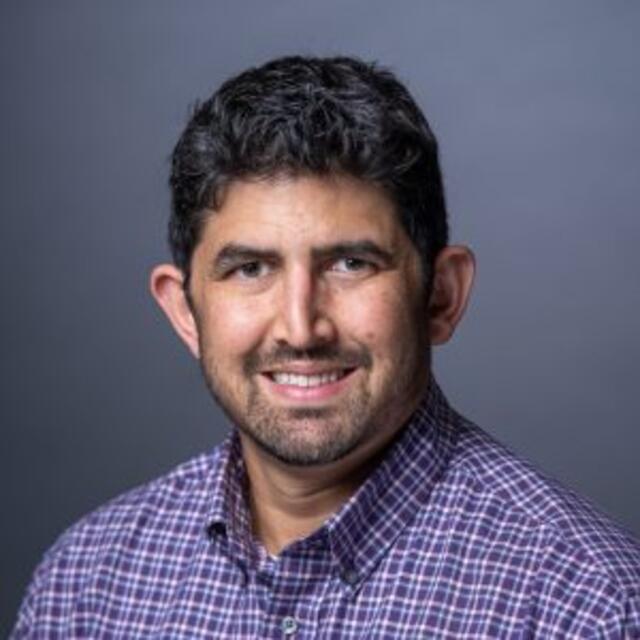
Dieter PfoserProfessor, Geography & Geoinformation Science Department
Originally from Austria, Dieter is a Professor at George Mason University in Fairfax, VA and currently the Chair of the Dept. of Geography and GeoInformation Science and the Director of GMU's Center for Geospatial Intelligence. Prior to this, he was a Senior Researcher and Associate Director of the Information Management Systems Institute in Athens, Greece. He has a PhD in computer science from Aalborg University, Denmark, where he was also an Assistant Professor.
His research interests include data management and machine learning for spatial and spatiotemporal data, graph algorithms for dynamic networks, and mining user-generated content. His work on mining trajectory datasets has focussed on map-matching and map-construction algorithms, i.e., matching trajectories to road networks and generating road networks from trajectories, respectively. He has co-authored over 100 papers and a book on "Map Construction Algorithms".
Over the years, Dieter has been the PI/co-PI/Project Coordinator of 20 collaborative research projects involving partners from academia, industry and the federal government. Funding agencies supporting his research include NSF, DARPA, IARPA, NGA, DHS, and the European Commission in excess of 15 million dollars. More information on his work can be found at https://www.dieter.pfoser.org.
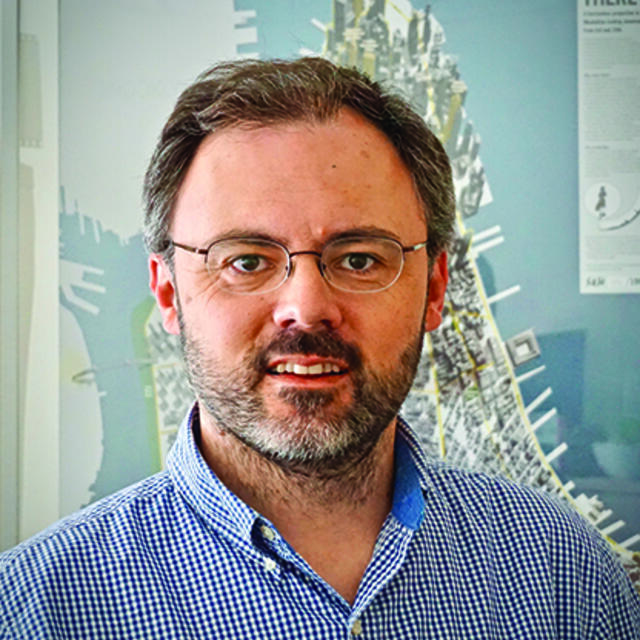
Harbir AntilProfessor, Department of Mathematical Sciences
Harbir Antil is head of the Center for Mathematics and Artificial Intelligence and a professor of mathematics at George Mason University. His areas of interest include optimization, calculus of variations, partial differential equations, numerical analysis, and scientific computing with applications in optimal control, shape optimization, free boundary problems, dimensional reduction, inverse problems, and deep learning. He also serves as the vice president of the SIAM Washington-Baltimore Section.
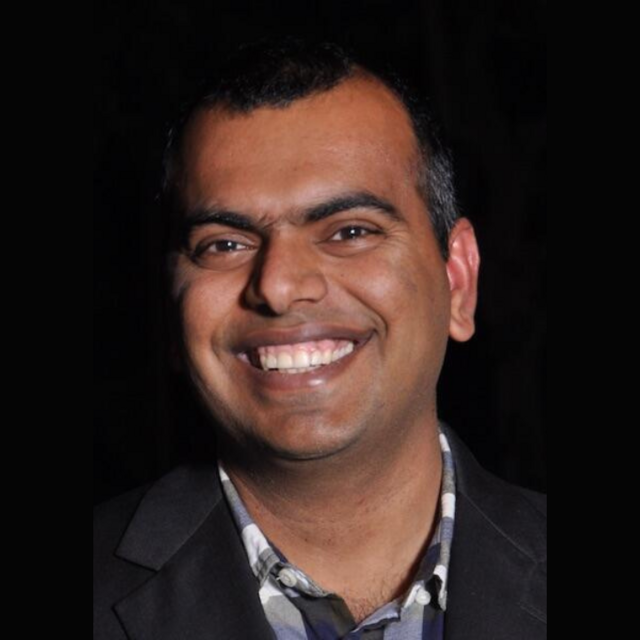
Alireza ErmagunAssistant Professor, Department of Geography and Geoinformational Sciences
Alireza Ermagun is the Director of Mobility Observatory and Data Analytics Lab and an Assistant Professor in the Department of Geography and Geoinformation Science at George Mason University. A common theme in his research activities is using emerging data and technologies, identifying novel solutions, developing practical methods, introducing innovative theories, and formulating policies and plans.
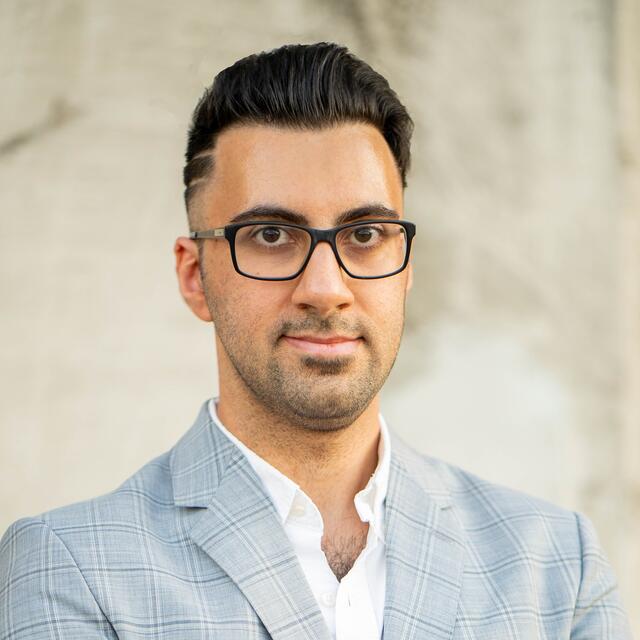
Rainald LöhnerProfessor, Department of Physics and Astronomy
Rainald Löhner is a professor in the Department of Physics and Astronomy and director of the Center for Computational Fluid Dynamics. His areas of interest include numerical methods, solvers, grid generation, parallel computing, visualization, pre-processing, fluid-structure interaction, shape and process optimization and computational crowd dynamics. His codes and methods have been applied in many fields, including aerodynamics of airplanes, cars and trains, hydrodynamics of ships, submarines and UAVs, shock-structure interaction, dispersion analysis in urban areas, hemodynamics of vascular diseases and pedestrian safety assessments.

Fereshte Ghahari KermaniAssociate Professor, Department of Physics and Astronomy
Fereshte Ghahari is an associate professor of physics at George Mason University. Her major accomplishments were the discovery of fractional quantum hall effect and hydrodynamic thermoelectric transport in graphene which both proved the importance of interaction effects in this system. Before moving to George Mason University in 2019, she worked as a postdoctoral researcher at National Institute of Standards and Technology (NIST). Her current research interests lie in understanding topological and strongly correlated physics in low dimensional materials by a combination of electrical transport, thermopower, and scanning probe microscopy measurements. She is the recipient of Chien-Shiung award, DOE early career and NSF CAREER awards.
College of Science celebrates its first graduates of unique AI-enhanced histotechnologist program
In May 2024, George Mason University's College of Science celebrated the first graduates of its AI-enhanced Histotechnologist Certification Program, created with Inova Health Systems. The program integrates digital and molecular pathology, using AI to cut cancer diagnosis times from 45 days to 24 hours. Led by Mason alumnus Nicholas Hoo-Fatt and assistant professor Anne Verhoeven, all graduates passed the ASCP board exam.

George Mason Continues to Prepare Students for a New Era of Innovation
Quantum science may operate at the tiniest scales of the universe, but its potential to reshape our world is anything but small. To prepare the next generation for a quantum-powered future, George Mason University once again hosted the Pathways to Quantum Immersion Program, preparing high school students for careers in this rapidly emerging field.


