Grand Challenge Initiative: Climate Resilience
Building a climate-resilient society
The Grand Challenge Initiative on Climate Resilience at George Mason University unites researchers, scholars, and innovators to address one of the most urgent issues of our time—building a society that can adapt to and thrive in the face of climate change. By activating science, policy, and creative solutions, Mason is preparing communities for a sustainable future through research-driven action and education that empowers tomorrow’s leaders.

Strengthening Climate Resilience Through Science and Policy
Climate resilience at George Mason University is built on a foundation of interdisciplinary research and collaboration across the College of Science and beyond. By connecting the physical, environmental, and biological sciences, Mason researchers are advancing knowledge and developing actionable strategies to help communities adapt to and mitigate the impacts of climate change.
The Department of J. Shukla Atmospheric, Oceanic and Earth Sciences (AOES) examines how atmospheric dynamics, ocean circulation, and geological processes interact to shape Earth’s climate system—offering critical insights into weather prediction, extreme events, and long-term climate trends. The Department of Environmental Science and Policy (ESP) bridges the gap between science and decision-making, translating research on water resources, conservation, and ecosystem health into policies that promote sustainability and resilience. The Department of Biology explores how life adapts to changing environments, from the molecular to the ecosystem level, informing conservation efforts and biodiversity protection.
Together, these programs form a powerful network of scientific discovery and innovation. Through integrated research, modeling, and policy analysis, Mason’s scholars and students are generating the knowledge needed to strengthen communities, safeguard natural systems, and build a more sustainable, climate-resilient future.
Are Earth's oceans suffocating?
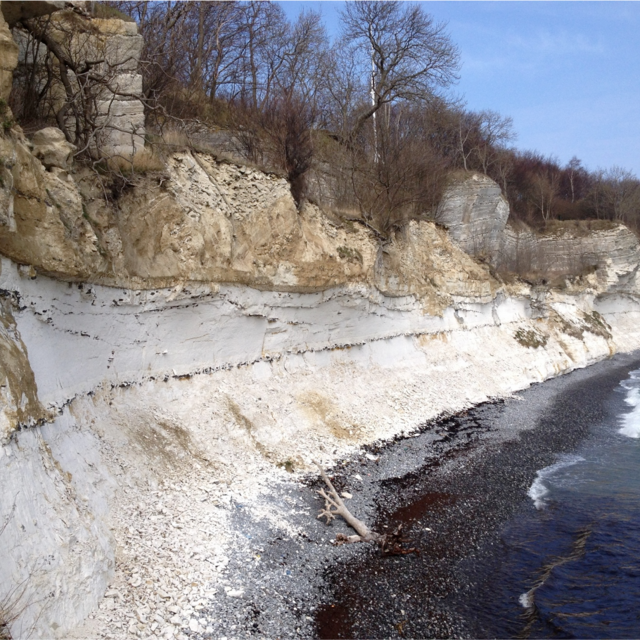
On the latest episode of Access to Excellence, Geoffrey Gilleaudeau, associate professor in the Department of Atmospheric, Oceanic, and Earth Sciences, discusses the past, present, and future of Earth’s oceans according to the physical and chemical characteristics of sedimentary rocks.

Innovative Coral Reef Study and Student-Led Chesapeake Bay Project Showcase Commitment to Environmental Stewardship
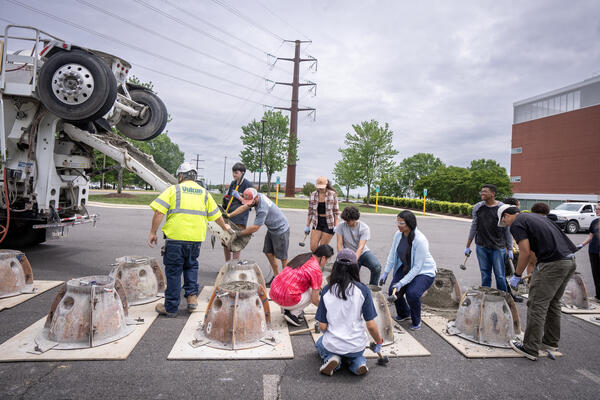
From the vibrant coral reefs of distant tropical oceans to the vital oyster reefs of the Chesapeake Bay, George Mason University researchers and students are redefining how we protect aquatic ecosystems. By combining cutting-edge scientific research with community-driven action research, our faculty and students are advancing reef science while realizing tangible restoration results.
Training Tomorrow’s Conservation Leaders
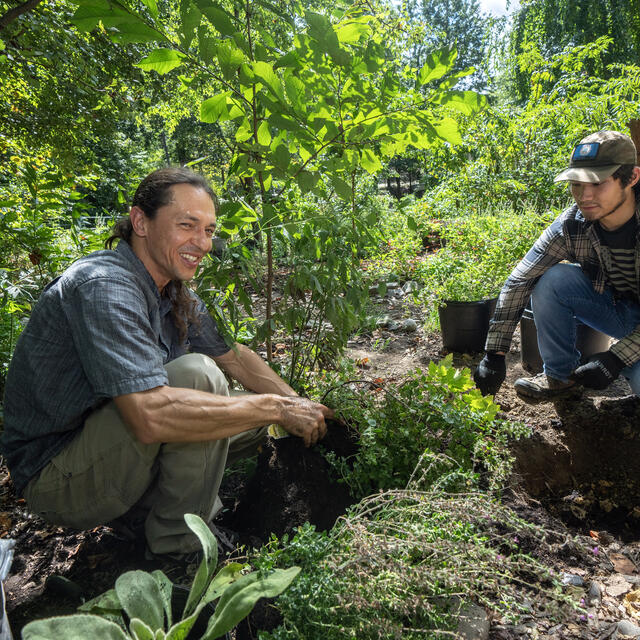
The Smithsonian-Mason School of Conservation (SMSC), a partnership between George Mason University and the Smithsonian Conservation Biology Institute, prepares the next generation of conservation leaders through hands-on, interdisciplinary programs. Students learn directly from Mason faculty, Smithsonian scientists, and global experts while gaining real-world experience in conservation biology. Alumni join a lifelong international network dedicated to protecting biodiversity and advancing sustainability worldwide.

Climate Resilience and Adaptation Minor
The Climate Resilience and Adaptation (CRA) minor is a transdisciplinary program designed to complement students' primary areas of study with specialized knowledge in climate science and policy, local and regional climate adaptation strategies and solutions, and how to translate research into practice and action. By exploring the complexities of climate change through diverse perspectives, students will gain the expertise needed to contribute meaningfully to local and global efforts to enhance resilience.
Climate Experts
Luis OrtizAssistant Professor, Atmospheric, Oceanic and Earth Sciences
Luis Ortiz is an Assistant Professor whose research advances understanding of how cities interact with the atmosphere amid a changing climate and how these interactions impact people and infrastructure. His work views cities as complex systems of environmental, human, and engineered domains, using high-resolution modeling and climate impact analysis to inform adaptation and mitigation strategies. He also focuses on translating actionable climate science to decision-makers, co-leading the Virginia Climate Center and serving on the New York City Panel on Climate Change. Ortiz earned his PhD from the City College of New York and joined George Mason University in 2022 after positions at The New School and the U.S. Department of Transportation.

Jagadish ShuklaDistinguished University Professor Emeritus
University Professor Jagadish Shukla is an internationally renowned climate scientist whose pioneering research and philanthropy have left an enduring legacy at George Mason University and beyond. Joining Mason in 1994, he founded the Department of Atmospheric, Oceanic, and Earth Sciences and launched the nation’s first PhD program in Climate Dynamics, which has since graduated more than 60 students. He also established the Center for Ocean-Land-Atmosphere Studies (COLA), securing over $49 million in research funding and advancing global climate prediction. A lead author of the Nobel Peace Prize–winning 2007 IPCC report, Shukla’s contributions have been recognized with the International Meteorological Organization Prize. Together with his wife, Anastasia, he founded Gandhi College in India and created the Shukla AOES Fellowship Endowment to support future generations of climate scientists.
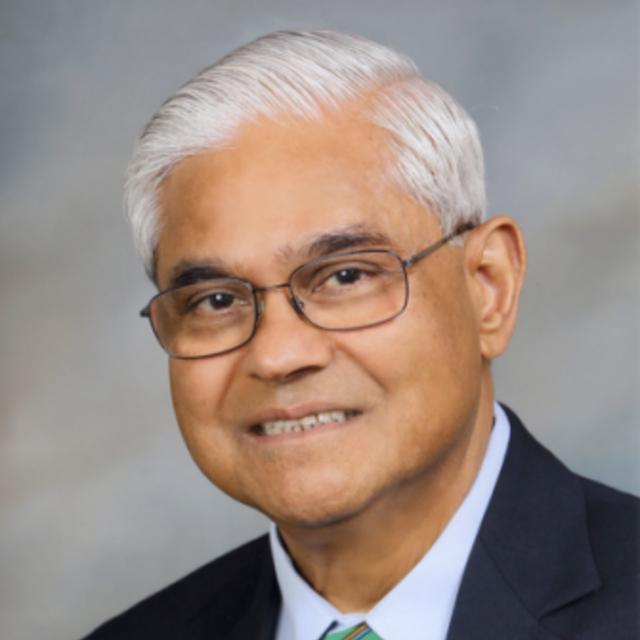
K. L. AkerlofAssociate Professor, Environmental Science and Policy
K.L. Akerlof is an Assistant Professor in the Department of Environmental Science and Policy at George Mason University, where she leads the “Communication for Environmental Science, Policy, and Human Behavior” concentration in the master’s program. Her research examines how communities interpret and use scientific information, integrating local knowledge, experience, and values in decision-making. Focusing on the intersections of governance, science communication, and public participation, her work explores how evidence informs policymaking and environmental action. Akerlof’s current projects span collaborations with the National Science Foundation, the National Park Service, and Mason’s Institute for Digital InnovAtion.

James KinterProfessor, Atmospheric, Oceanic and Earth Sciences
James Kinter is a Professor in the Department of Atmospheric, Oceanic, and Earth Sciences at George Mason University, where he serves as Director of the Center for Ocean-Land-Atmosphere Studies (COLA) and the Virginia Climate Center (VCC). His research focuses on climate variability and predictability, including phenomena such as monsoons, El Niño and the Southern Oscillation, and extreme weather events. Through his leadership at the VCC, Kinter works to strengthen the resilience of Virginia’s communities to the impacts of climate change. He earned his PhD in geophysical fluid dynamics from Princeton University in 1984 and has held positions at NASA’s Goddard Space Flight Center and the University of Maryland. Kinter is a Fellow of the American Meteorological Society and has served on numerous national panels for scientific research and computational climate modeling.

Jennifer SalernoAssociate Professor, Environmental Science and Policy
Jennifer Salerno is an Associate Professor in the Department of Environmental Science and Policy, where she teaches Environmental Microbiology and Coral Reef Ecology. Her research explores how microorganisms, both symbiotic and free-living, affect organism health and ecosystem function, with applications in conservation and environmental management. Using tools such as molecular biology, next generation sequencing, and bioinformatics, she investigates microbial responses to environmental change in systems ranging from coral reefs to freshwater streams. Beyond research, Salerno is active in science communication and policy, having served as a NOAA Sea Grant Knauss Fellow in the U.S. House of Representatives and an AAAS Science and Technology Policy Fellow at the U.S. Department of State.

Jennifer SklarewAssistant Professor, Environmental Science and Policy
Jennifer Sklarew is an Assistant Professor in the Department of Environmental Science and Policy at George Mason University, where she coordinates the MS Concentration in Energy and Sustainability Policy and Science. With over 30 years of experience in energy and environmental policymaking, her research explores how institutional relationships and catastrophic events drive policy change, with a focus on sustainability and resilience in the energy-water nexus. She currently leads projects developing hydropower micro-turbines on Mason’s Fairfax campus and addressing food-energy-water-climate challenges in rural communities. Sklarew is the author of Building Resilient Energy Systems: Lessons from Japan, published by Routledge.

Partnering for Climate Resistance
The College of Science collaborates across disciplines and sectors to strengthen climate resilience. Through partnerships with government, industry, and research institutions, Mason scientists advance data-driven solutions that protect communities, ecosystems, and the planet’s future.