
Grand Challenge Initiative: Education for All
Advancing 21st-Century Education for All
The College of Science is committed to transforming education to break down barriers and create inclusive, accessible learning opportunities that prepare students for the workforce of the future. Through innovative teaching, cutting-edge research, and community engagement, we empower learners and communities worldwide to address complex scientific challenges and drive meaningful societal impact.

Empowering Pathways in Science and STEM
The College of Science is advancing 21st-century education by creating inclusive, student-centered pathways that support STEM success from the first year through graduation and beyond. Through innovative teaching, interdisciplinary collaboration, and evidence-based programs like the STEM Accelerator, the college works to increase STEM participation, improve retention, reduce time to degree, and prepare graduates for the workforce or advanced study. Accelerator faculty also elevate the value of teaching by mentoring students and instructors, advancing pedagogical innovation, and contributing to national scholarship in STEM education.
This commitment is reflected in a suite of high-impact programs that extend learning beyond the classroom. Learning Communities, Learning Assistant Program, Pathways in Science First Year Experience, and research-focused opportunities such as ASSIP provide students with early academic support, hands-on research, peer mentoring, and strong connections to faculty. Together, these programs foster belonging, build essential scientific skills, and empower College of Science students to thrive in a rapidly evolving STEM landscape.
George Mason Opens Data Science Lab School in Shenandoah Valley
George Mason University, in partnership with Frederick County Public Schools and regional districts, has launched the Shenandoah Valley Rural Regional College Partnership Laboratory School for Data Science, Computing, and Applications. The school offers rural high school students hands-on learning, dual-enrollment opportunities, certifications, and pathways into STEM careers that meet Virginia’s growing workforce needs.

High Schoolers Gain Hands-On Research Experience and College Credit with ASSIP
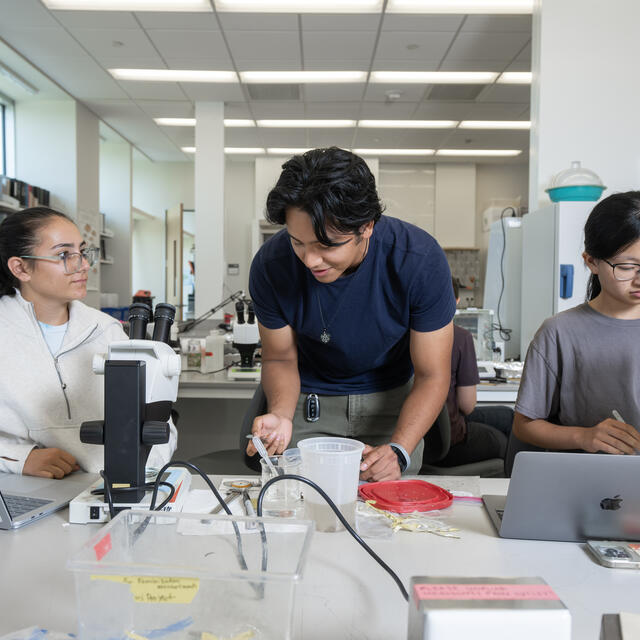
George Mason University’s Aspiring Scientists Summer Internship Program (ASSIP) gives high school and undergraduate students the opportunity to engage in authentic, mentor-led research while earning college credit. From cancer biology and neuroscience to solar physics and nanotechnology, ASSIP interns gain hands-on experience, professional skills, and early exposure to STEM careers.


George Mason Continues to Prepare Students for a New Era of Innovation
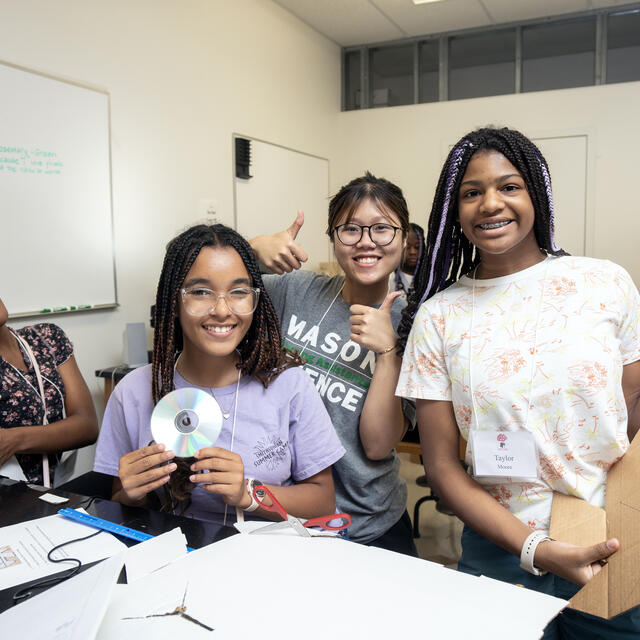
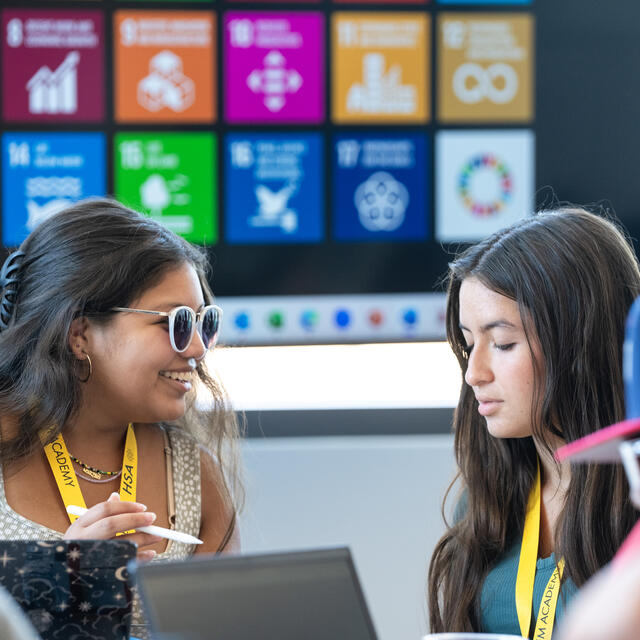
Quantum science may operate at the tiniest scales of the universe, but its potential to reshape our world is anything but small. To prepare the next generation for a quantum-powered future, George Mason University once again hosted the Pathways to Quantum Immersion Program, preparing high school students for careers in this rapidly emerging field.

Middle and High Schoolers Discover STEM at FOCUS 2025
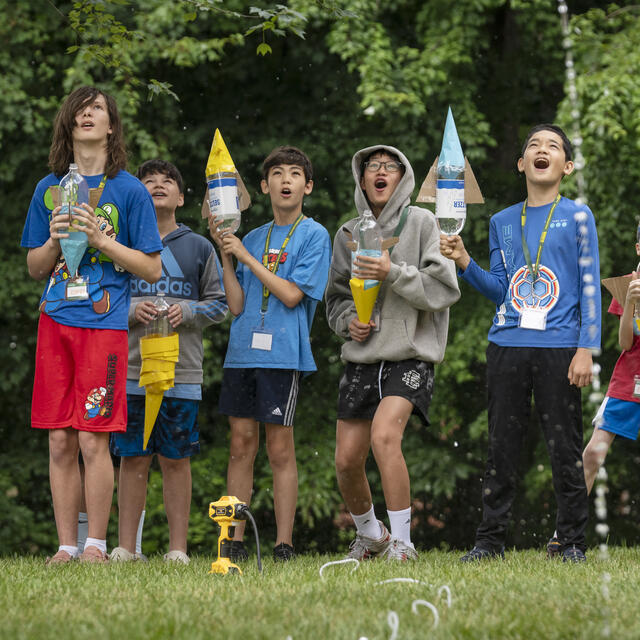
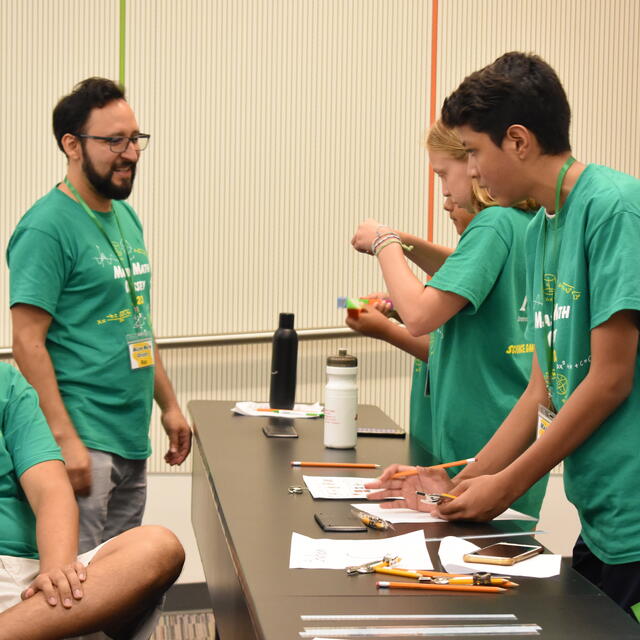
George Mason University’s FOCUS 2025 STEM Camp and Academy brought middle and high school students together for hands-on learning, expert panels, and immersive activities that introduced a wide range of STEM fields while building confidence and community. Through interactive workshops, from chemistry and robotics to bioinformatics and astronomy, students explored potential career paths, connected with peers who share their interests, and gained early exposure to college-level experiences.

Educators Advancing Education
Patrick VoraAssociate Professor, Department of Physics and Astronomy
Patrick Vora is a physics professor at George Mason University who works with graduate and undergraduate students to study quantum phenomena in atomically-thin materials using optics, electronic transport, and magnetic measurements. He also is the Director of the Quantum Science and Engineering Center where his research focuses on quantum phenomena dominate when materials are reduced to nano-scale dimensions and lead to diverse optical, electronic, and magnetic properties distinct from the bulk form. Using a range of optical and electronic experimental techniques, he studies 2D materials (graphene, transition metal dichalcogenides, etc.), 1D materials (carbon nanotubes, DNA photonic wires, nanowire memristors), and heterostructures formed by combining these materials.

Padmanabhan SeshaiyerProfessor, Department of Mathematical Sciences
Padmanabhan Seshaiyer (Padhu) is a Professor and Director at George Mason University where he has served in multiple leadership positions including the Associate Dean for Academic Affairs, Director of the STEM Accelerator Program and Director of the Center for Outreach in Mathematics Professional Learning and Educational Technology. During the last decade, he initiated and directed a variety of research, educational and outreach programs including faculty development, post-graduate, graduate and undergraduate research, K-12 outreach, teacher professional development, and enrichment programs, to foster the interest of students and teachers in Mathematics education at all levels.

Kerin Hilker-BalkissoonDirector of STEM Access, Outreach, and Career Pathways
Kerin Hilker Balkissoon is an accomplished higher education leader with over 25 years of experience engaging PK-12, community colleges, universities, non-profits, and workforce partners to support college access, student success, and career attainment. Known for her innovative approach to post-secondary program design, Kerin integrates expertise in career counseling, career pathways, high-impact educational practices, lifecycle intervention frameworks, and developmental advising to create holistic service models that drive exceptional student outcomes. With a proven track record in designing data-driven interventions, Kerin focuses on enhancing post-secondary enrollment and credential completion. Her expertise includes developing targeted service models to engage first-generation college students, student-parents, international students, and community college transfer students.
Kelly KnightProfessor, Forensic Science Program
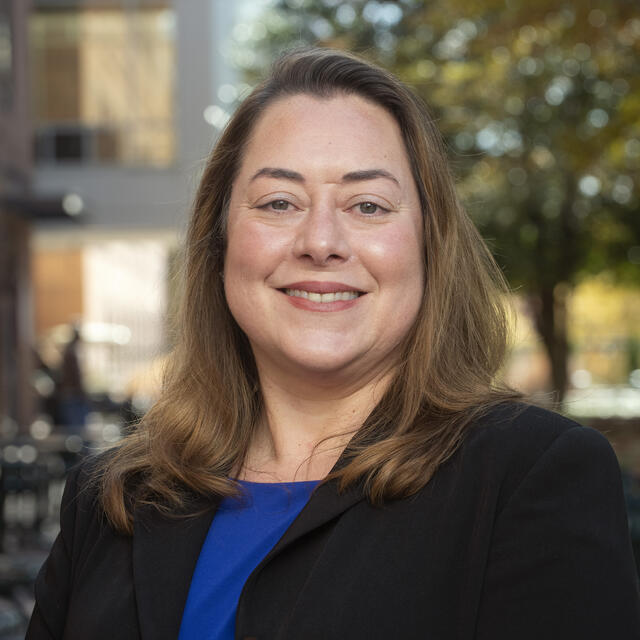
Kelly Knight is a professor with the George Mason University Forensic Science Program and a STEM Accelerator. She teaches undergraduate and graduate courses in forensic DNA and forensic chemistry and is also the principal investigator of the forensic DNA laboratory. As a STEM Accelerator, she guides and mentors undergraduate students in the Forensic Science Program and coordinates K-12 STEM outreach including the FOCUS summer programs for middle and high school students.
Jessica RosenbergProfessor, Department of Physics and Astronomy
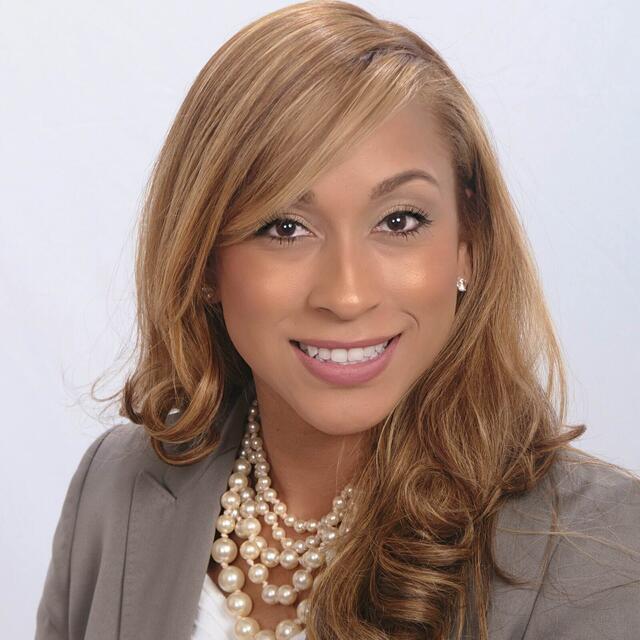
Jessica Rosenberg is a physics professor and Director of Education in the Quantum Science and Engineering Center. Her astrophysics research is focused on understanding the evolution of galaxies over cosmic time primarily by studying the baryonic content of galaxies and the intergalactic medium. Her work in STEM education research spans undergraduate education, graduate education, and faculty development. She is interested in how we expand the use of research-based teaching practices as a mechanism to improve student learning in the undergraduate classroom through graduate student and faculty development. With the Quantum Materials Center, Rosenberg is exploring how we can prepare students coming from a broad range of STEM backgrounds for the quantum information science workforce.

Tina BellAssociate Professor, Department of Biology
Tina Bell is an associate professor in the Department of Biology and a member of the College of Science STEM Accelerator Program. Bell teaches cell biology and genetics and co-coordinates several student success initiatives, including the STEM Accelerator Learning Assistants program, STEM Bridge, and Math Boot Camps. Her outreach and research efforts include leading a regional National Ocean Sciences Bowl competition, partnering with a rural Georgia school district to deliver experiential STEAM education, and serving as part of an NSF Noyce–funded team supporting future STEM educators. As a Dean’s Fellow, Bell is leads the College of Science’s Women’s Leadership in STEM Program, focused on building leadership skills, mentorship, and career preparation for the next generation of women leaders in STEM.

Rebecca JonesProfessor, Department of Chemistry and Biochemistry
Rebecca M. Jones is a professor in the Department of Chemistry and Biochemistry and the STEM Accelerator, where she regularly teaches general and inorganic chemistry and works to improve outcomes for STEM students. Her research interests include improving STEM education, photographic chemistry, and faculty mentoring and student development related to undergraduate research experiences. She is an active member of the American Chemical Society, the president of Mason’s chapter of Sigma Xi, and an elected chemistry councilor on the Council on Undergraduate Research (since 2016). She has served the College of Science as a faculty senator (2016-2019), Secretary of the faculty (2017-2020), Chair of the faculty (2020-2023), and coordinator of the COS Undergraduate Research Colloquium (since 2015).

George Mason’s new Life Sciences and Engineering Building is stocked with potential energy for students and the region
With university classrooms and more than 30 different laboratory spaces for teaching, design, and fabrication, the building offers state-of-the-art facilities for training in disciplines like athletic training and kinesiology, microbiology, chemistry, engineering, forensic science, robotics and autonomous vehicles, and more.

Inspire Tomorrow’s STEM Leaders with the Noyce Program
The Noyce Scholarship Program supports undergraduate and graduate science and mathematics majors who are preparing to become secondary STEM educators. Scholars receive at least $10,000 per year, along with professional development, mentoring, and networking opportunities to help launch successful teaching careers.


